
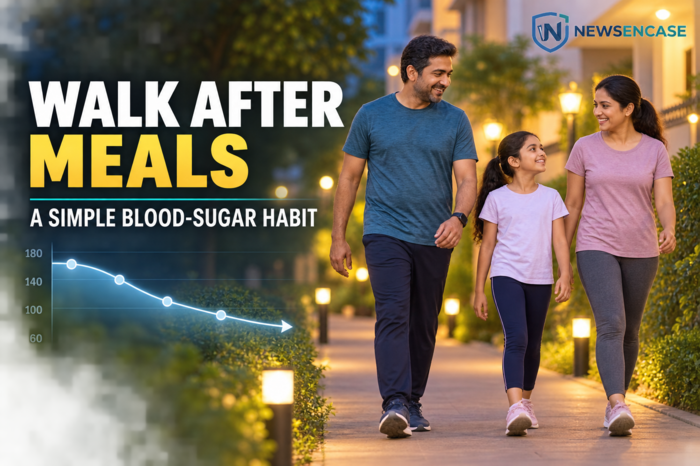
A short walk soon after eating may reduce post-meal blood-sugar rises while helping people break up prolonged periods of sitting.
A short walk after eating is one of the simplest activity habits attracting scientific interest. Research suggests that moving soon after a meal can reduce the rise in blood glucose compared with remaining seated.
Muscles use glucose for energy when they contract. Gentle activity therefore offers the body another route for clearing some circulating glucose after food, even when the movement is not a formal workout.
When and How Long Should You Walk?
Evidence indicates that beginning activity relatively soon after eating may be useful. Studies have examined walks ranging from a few minutes to around 30 minutes, with some showing benefits from shorter sessions.
A practical routine is a comfortable 10-minute walk after one or more main meals. The pace should feel purposeful but sustainable. Indoor corridors, marching in place or light household movement can be alternatives when weather, safety or mobility makes outdoor walking difficult.
People who are inactive can begin with two to five minutes. The goal is to create a repeatable habit, not to exercise so hard that digestion becomes uncomfortable.
Important Precautions
Walking is not a replacement for diabetes medication or a clinician-directed eating plan. People using insulin or medicines that can cause hypoglycaemia need personalised advice because activity may lower glucose further.
Anyone who experiences shakiness, sweating, confusion, dizziness or unusual weakness should follow their prescribed hypoglycaemia plan and seek help when necessary. Footwear and foot care are especially important for people with diabetes-related nerve or circulation problems.
Post-meal walks can complement, rather than replace, weekly exercise. Adults should still aim for regular aerobic movement and muscle-strengthening activity appropriate to their health.
The habit’s appeal lies in its simplicity: it breaks up sitting, requires no equipment and can be attached to an existing daily event. Even so, individual responses vary, and people managing diabetes should use their own clinical targets.
About the Author