
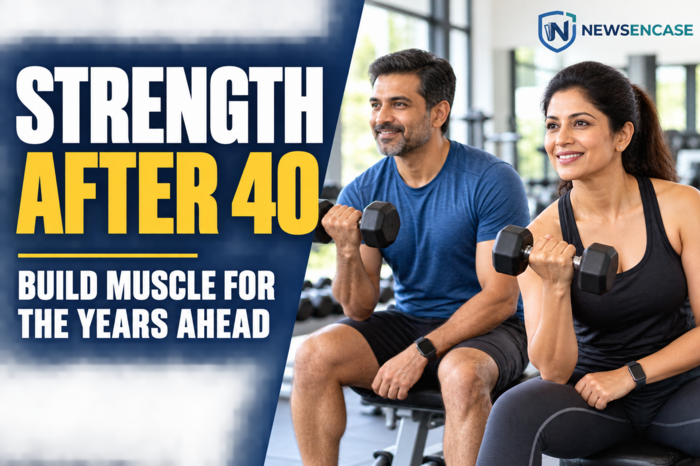
Strength training after 40 can support muscle, bone health, balance and independence when workouts progress gradually and allow recovery.
Turning 40 does not require a completely different workout, but it is a useful time to prioritise muscle, mobility and recovery. Adults can lose muscle and strength with age, particularly when activity levels fall. Resistance training helps preserve the capacity needed for lifting, climbing stairs and remaining independent later in life.
It also supports bone health, balance and glucose management. The aim is not necessarily bodybuilding; it is maintaining useful physical reserve.
A Practical Two-Day Routine
Two full-body sessions a week can be an effective starting point. Each session may include a squat or chair stand, hip hinge, push, pull, calf exercise, loaded carry and core movement.
Beginners can perform one or two sets with controlled technique. When the top end of a repetition range becomes comfortable, resistance can be increased gradually. Dumbbells, machines, bands and bodyweight can all work.
Recovery may need more attention than it did in earlier decades. Hard sessions for the same muscles should be separated, and sleep and nutrition should support training. Soreness is not required for progress.
Train Around Problems, Not Through Them
Previous injuries may require exercise modifications, but they do not always mean avoiding strength work. A painful movement can often be adjusted through load, range, grip or equipment under qualified guidance.
Sharp pain, worsening joint swelling, chest discomfort, dizziness or unexplained breathlessness are reasons to stop. People with osteoporosis, uncontrolled blood pressure, heart disease or recent surgery should obtain individual advice.
Walking and other aerobic activity remain important, so strength work should complement rather than replace them. Mobility exercises can also help people use a comfortable range of motion.
The biggest mistake is waiting for the perfect programme. Start with movements that can be performed safely, record progress and build slowly. Strength gained after 40 can improve everyday life now while preparing the body for the decades ahead.
About the Author