
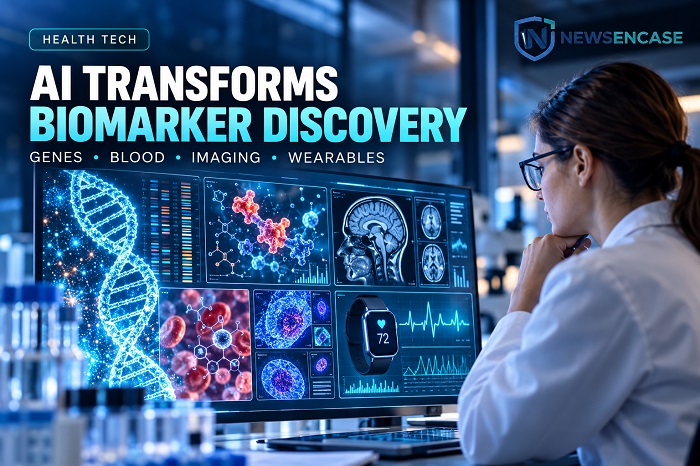
AI can uncover biomarkers from genetic, imaging, blood and wearable data, but researchers say external validation and clinical evidence are essential before patient use.
Artificial intelligence could accelerate the discovery of biological signals used to detect diseases, predict their progression and identify patients most likely to benefit from particular treatments.
However, researchers warn that an AI-identified biomarker should not be treated as clinically useful simply because it performs well in a computer model.
A review published in Signal Transduction and Targeted Therapy examined how AI is being used to discover and interpret biomarkers across cancer, cardiovascular disease, neurodegenerative disorders and metabolic conditions.
The researchers concluded that AI’s real value will depend on rigorous external validation, biological evidence and proof that the biomarker improves patient care—not predictive accuracy alone.
What Is an AI-Identified Biomarker?
A biomarker is a measurable characteristic that provides information about a biological process, disease or response to treatment.
Traditional examples include blood glucose for diabetes, cholesterol for cardiovascular risk and specific genetic mutations that guide cancer treatment.
An AI-identified biomarker may be a single measurement, but it is often a complex pattern discovered by analysing multiple types of information. These can include:
- Genes and epigenetic changes
- RNA and protein levels
- Metabolites and lipids
- Blood-based signals such as circulating tumour DNA
- CT, MRI, PET and digital-pathology images
- Electronic health records
- Sleep, movement and heart-rate data from wearable devices
AI can search these large datasets for combinations of features that might be difficult for researchers to identify using conventional analysis.
How AI Finds New Disease Signals
Machine-learning models can compare thousands or millions of biological variables across patients with different diagnoses, outcomes or responses to treatment.
Classical methods such as regularised regression and support-vector machines can help researchers narrow large datasets to a smaller group of candidate markers.
Deep-learning systems can analyse complex information such as medical images, genomic sequences and cellular networks. Graph neural networks can also model relationships between genes, proteins, drugs, biological pathways and diseases.
Foundation and generative models may propose new molecular signatures or disease mechanisms. However, the review stresses that these outputs should initially be treated as research hypotheses—not established medical evidence.
Possible Uses in Healthcare
Properly validated AI-derived biomarkers could support several areas of medicine.
They may help detect cancer through patterns in circulating DNA, identify subtle disease-related features in medical scans or monitor changes in sleep and mobility using wearable devices.
Biomarkers may also divide patients into disease subgroups, estimate the risk of progression or identify people who are more likely to respond to a targeted treatment.
In clinical trials, biomarkers could help researchers recruit participants with specific biological characteristics, potentially making it easier to measure whether an experimental drug works.
Why Many Candidate Biomarkers Fail
Many promising biomarkers perform well in the dataset used to discover them but lose accuracy when tested at another hospital or in a different population.
An algorithm may learn irrelevant signals connected to a particular laboratory, scanner, treatment pathway or data-collection method instead of learning the underlying biology.
For example, a model might associate a laboratory test with severe illness because doctors order that test more frequently for critically ill patients. In that case, the apparent biomarker reflects clinical behaviour rather than a biological cause of disease.
Differences in ancestry, age, socioeconomic conditions, medical access and accompanying illnesses can also affect a model’s reliability.
Researchers warn that inadequate population diversity could produce biomarkers that work well for some groups but perform poorly for others.
From AI Prediction to Clinical Test
The review proposes a multi-stage process before an AI-discovered biomarker is used in patient care:
- Discover a candidate signal in well-designed data.
- Test it in an independent patient group.
- Examine its stability across hospitals, populations and technologies.
- Confirm its connection to a plausible biological mechanism.
- Determine whether it changes a clinical decision.
- Evaluate it prospectively in real healthcare settings.
- Monitor accuracy, fairness and safety after deployment.
Explainable-AI tools can show which features influenced a prediction, but they cannot prove that those features cause a disease or determine treatment response.
Ultimately, an AI-identified biomarker becomes medically valuable only when it can be measured reliably, reproduced independently and shown to improve diagnosis, treatment or patient outcomes.
About the Author