Health experts say strength training during pregnancy can improve muscle strength, reduce back pain, and support childbirth when performed safely under medical guidance.
New Delhi: Strength training during pregnancy can be a safe and effective way for expectant mothers to maintain their fitness, improve overall health, and prepare their bodies for childbirth, according to fitness and healthcare experts.
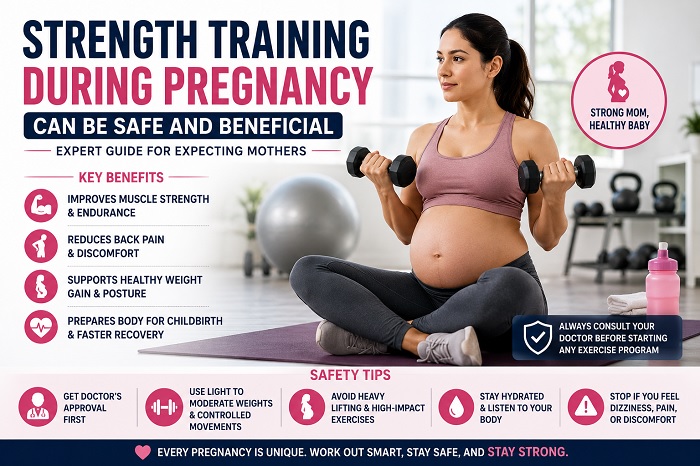
Medical professionals emphasize that regular strength-based exercises, when performed with proper technique and a doctor’s approval, can help reduce common pregnancy discomforts such as back pain, joint stress, and muscle weakness. It may also improve posture, balance, and endurance, making everyday activities easier throughout pregnancy.
Experts recommend focusing on controlled movements using light to moderate weights, resistance bands, or bodyweight exercises. Major muscle groups—including the legs, hips, back, arms, and core—can be strengthened through pregnancy-friendly workouts tailored to each trimester.
However, healthcare providers advise avoiding exercises that involve heavy lifting, high-impact movements, or activities with a high risk of falls or abdominal injury. Women should also avoid holding their breath during lifts and ensure they stay hydrated while exercising.
Fitness specialists note that exercise routines should be adjusted as pregnancy progresses. Listening to the body’s signals, taking adequate rest, and stopping immediately if symptoms such as dizziness, bleeding, severe pain, or contractions occur are essential for maternal and fetal safety.
For women who were physically active before pregnancy, experts generally encourage continuing exercise with appropriate modifications. Those who are new to strength training should begin gradually under the supervision of qualified fitness professionals and after consulting their obstetrician.
Current health guidelines continue to support regular physical activity during uncomplicated pregnancies, highlighting its role in improving cardiovascular health, managing healthy weight gain, reducing the risk of gestational diabetes, and promoting faster postpartum recovery.
Medical experts stress that every pregnancy is different, and exercise plans should always be individualized based on a woman’s health condition, fitness level, and medical advice.
About the Author