
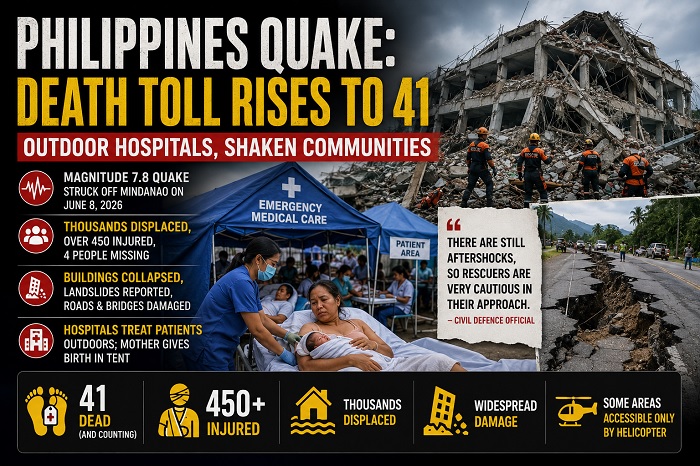
General Santos, Philippines: The death toll from the powerful 7.8-magnitude earthquake that struck the southern Philippines has risen to 41, while more than 450 people have been injured and thousands remain displaced as rescue and recovery operations continue.
The earthquake, which struck off the coast of Mindanao on June 8, caused widespread destruction across several provinces, collapsing buildings, triggering landslides, and damaging critical infrastructure. Authorities also reported four people missing as search efforts continued in the worst-affected areas.
Hospitals Shift Outdoors Amid Safety Concerns
Medical teams have been forced to treat patients in temporary outdoor facilities after several hospital buildings suffered structural damage. In one hospital near General Santos City, doctors and nurses continued providing emergency care in tents under intense heat, while a woman safely gave birth in a makeshift treatment area.
Health officials said dozens of patients were moved outside due to fears that damaged hospital structures could collapse during aftershocks.
Rescue Efforts Hampered by Aftershocks
Authorities said a series of strong aftershocks have complicated rescue operations across the region. Some affected communities in Sarangani Province remain accessible only by helicopter because of damaged roads and the collapse of a major bridge.
Disaster response teams, assisted by rescue dogs and heavy equipment, continue searching through collapsed buildings. However, officials acknowledged that some operations have shifted from rescue missions to recovery efforts.
Landslides and Infrastructure Damage
Among the hardest-hit areas was Glan municipality, where a landslide buried multiple homes, killing at least 13 people. Roads, bridges, schools, residential buildings, and commercial establishments suffered extensive damage.
Videos shared online showed the collapse of a shopping center in General Santos and severe structural damage to other public buildings as terrified residents fled for safety.
Residents Face Uncertain Future
Many survivors described scenes of panic as buildings swayed violently and cracks appeared in roads and homes. Several residents said they may be forced to permanently relocate after engineers warned that damaged properties were unsafe.
Families who lost homes and livelihoods now face a long recovery process as authorities assess the full scale of the destruction.
Tsunami Threat Lifted
Following the earthquake, tsunami warnings were issued across parts of the Philippines, Indonesia, and other areas in the region. However, the threat was later downgraded and all warnings were eventually canceled after officials confirmed there was no significant tsunami risk.
Emergency response teams remain on high alert as aftershocks continue and recovery operations intensify across affected communities.
About the Author