
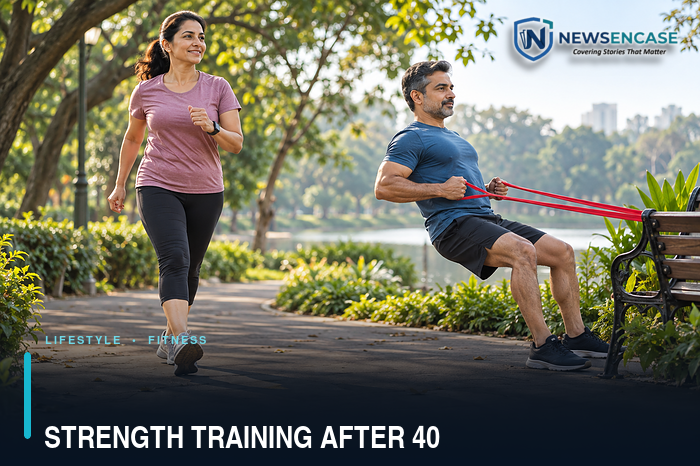
Walking is excellent exercise, but adults over 40 also need resistance training to preserve muscle, power and everyday function.
Walking is one of the most accessible forms of exercise. It supports cardiovascular health, mood, mobility and weight management. After 40, however, relying only on walking may leave an important fitness need unaddressed: preserving muscle and strength.
Adults gradually lose muscle mass and power with age, especially when daily life involves prolonged sitting. Muscle power—the ability to produce force quickly—can decline even faster than basic strength. This matters because lifting luggage, climbing stairs or preventing a fall requires muscles to respond effectively.
Walking trains the heart and legs, but a familiar walking route may stop providing enough resistance to stimulate muscle growth. Strength training challenges muscles against progressively greater loads. It can be performed using dumbbells, resistance bands, gym machines or body weight.
A practical programme should cover major movement patterns: squatting or sitting down, pushing, pulling, hinging at the hips, carrying and controlled core work. Two full-body sessions each week can be a realistic starting point. Beginners might perform one or two sets of eight to 12 controlled repetitions and increase resistance gradually when the exercises become easy.
The goal is not bodybuilding. Better strength can support bone health, improve glucose control and make everyday activities easier. It may also help people remain active when joint discomfort or reduced stamina makes long cardio sessions difficult.
Walking should remain part of the routine. A balanced week could combine brisk walks, strength sessions and short mobility or balance exercises. Faster walking intervals or hills can add intensity, but they still do not fully replace resistance work.
Technique and progression matter more than lifting heavy weights immediately. Sharp pain, dizziness or unusual breathlessness are signs to stop. People with cardiovascular disease, uncontrolled blood pressure, osteoporosis or recent injuries should obtain personalised advice.
The strongest long-term strategy after 40 is not choosing between cardio and weights. It is using both: walking for endurance and general activity, and resistance training to protect the muscle needed for an independent life.
About the Author