Learn Navratri Day 7 Maa Kalaratri puja, mantra, jaggery bhog and fasting practices, with the meaning of her protective form.
Navratri Day 7 honours Maa Kalaratri, the seventh form of Goddess Durga. Despite her fierce appearance, devotees regard her as a protective and auspicious form. The Delhi calendar lists Kalaratri Puja on Saturday, October 17, during Shardiya Navratri 2026.
Significance of Maa Kalaratri
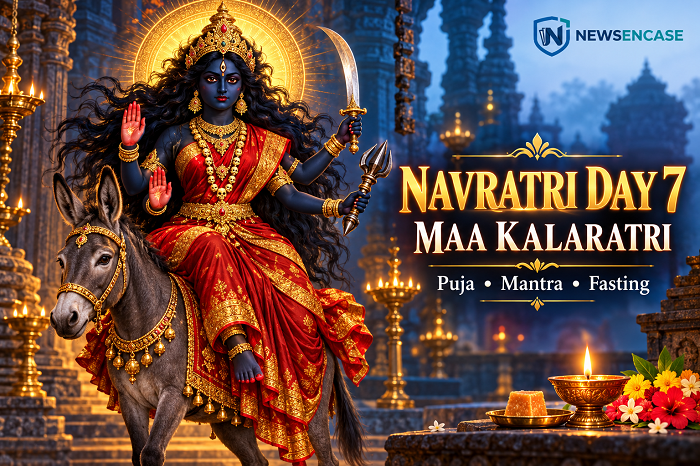
Maa Kalaratri is traditionally depicted with a dark complexion, flowing hair, four arms and a donkey mount. Her blessing gestures express protection and reassurance. She is also called Shubhankari, meaning one who brings auspiciousness. Worshippers reflect on the courage to face fear; the ritual should not be described as a proven remedy for illness or other personal difficulties.
Simple Puja Vidhi
Clean the prayer area, place flowers and water before the goddess’s image, and light a diya. Recite her mantra at a comfortable pace. You may follow it with a familiar Durga hymn, aarti and quiet prayer. Evening worship is part of some households’ routine, but there is no universal requirement to undertake an elaborate midnight ritual.
Maa Kalaratri Mantra
ॐ देवी कालरात्र्यै नमः॥
Om Devi Kalaratryai Namah.
Meaning: Salutations to Goddess Kalaratri. Chant attentively according to your family’s practice; a particular repetition count is not compulsory for this simple guide.
Traditional Bhog
Jaggery, or gur, is a customary offering associated with Maa Kalaratri. Place a small portion in a clean bowl and distribute it as prasad after worship. Families may include other offerings according to their tradition, so a different home menu does not automatically make the observance incorrect.
Fasting and Meal Ideas
Keep a straightforward fasting menu ready, such as fruit, curd and a permitted cooked preparation. Roasted makhana or a small serving of samak can provide variety. Check the salt and seasonings you use, and avoid assuming that every packaged “vrat” product matches your household’s restrictions.
Calendar and Closing Rituals
The 2026 Delhi calendar has Saptami at sunrise on both October 17 and 18. This affects how calendar days align with the later goddess observances. Check the local panchang for Ashtami preparations instead of assuming the next date must be Ashtami. If arranging Kanya Pujan, confirm your family’s chosen observance and plan the food and invitations in advance.
About the Author