
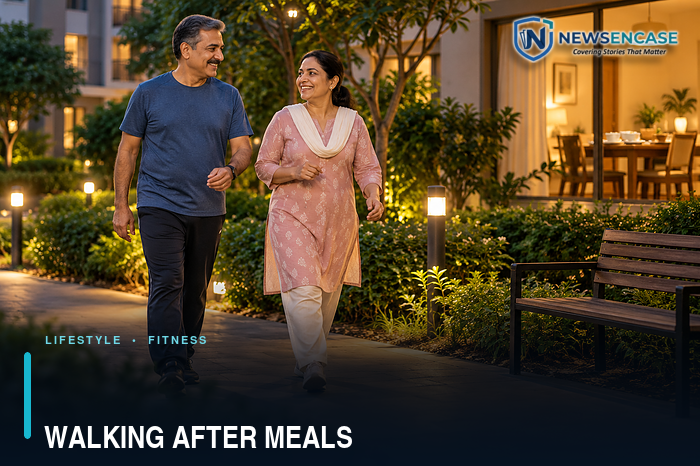
A short walk after eating may support blood-sugar control and reduce prolonged sitting. Learn the best timing, pace and safety precautions.
A short walk after eating has become a popular wellness recommendation because working muscles use glucose for energy. The habit may help reduce the size and duration of the rise in blood sugar that normally follows a meal.
The walk does not need to be strenuous. Ten to 15 minutes at a comfortable or moderately brisk pace may be enough to add useful movement, particularly after a meal rich in carbohydrates. Some people find three short post-meal walks easier than completing one long daily session.
Timing may matter because blood glucose often begins rising soon after food is consumed. Starting within roughly 30 minutes can allow muscle activity to overlap with that rise. However, readers should not become anxious about an exact minute; regularity is more important than perfect timing.
Post-meal walking has other practical benefits. It interrupts sitting, may support digestion for some people and adds to total daily activity without requiring gym equipment. An indoor corridor, terrace or shopping area can work when weather or air pollution makes an outdoor walk unsuitable.
The practice is not a licence to ignore diet. Meal size, fibre, protein, sleep, stress and medication all influence glucose levels. A balanced plate containing vegetables, protein and an appropriate portion of carbohydrate remains important.
People with diabetes should continue following their treatment plan. Exercise can lower blood glucose, and those using insulin or medicines that cause hypoglycaemia may need to monitor levels and carry a fast-acting carbohydrate source. Medication should never be reduced without medical guidance.
Walking immediately after a very heavy meal may feel uncomfortable. A gentle pace is more appropriate than running or intense intervals. People with reflux may also need to observe whether movement helps or worsens symptoms.
Anyone who develops chest pain, faintness or unusual breathlessness should stop and seek medical help. Individuals with foot ulcers, severe neuropathy or balance problems may need a safer alternative such as supervised indoor cycling.
For most people, a short post-meal walk is a low-cost habit with little complexity. It turns a routine part of the day into an opportunity to move and may support healthier glucose patterns over time.
About the Author