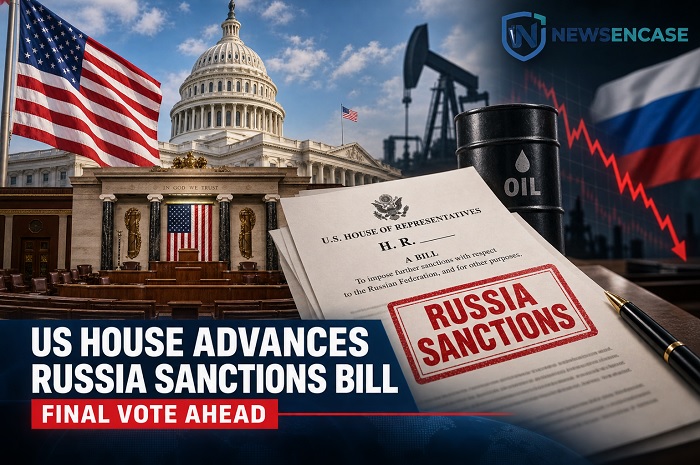
The US House has advanced a Russia sanctions bill that could authorise tariffs of up to 100% on major Russian-energy buyers, potentially including India and China.
The US House of Representatives has moved a sweeping Russia sanctions package towards a final vote, bringing legislation that could expose major buyers of Russian energy—including India and China—to tariffs of up to 100% closer to becoming law.
The House approved the procedural rule for considering the measure by a narrow 214–211 vote on September 15, 2026. Debate and a final vote were expected on September 16.
The legislation, named the Lindsey O. Graham Sanctioning Russia and Iran Act of 2026, was previously approved by the Senate in an 86–11 bipartisan vote. If the House approves the Senate version without further changes, it will be sent to President Donald Trump, who has indicated that he supports the measure.
What the Russia Sanctions Bill Proposes
The bill seeks to increase economic pressure on Moscow over its continuing war in Ukraine by targeting Russia’s energy revenues, financial institutions and sanctions-evasion networks.
Its key provisions include:
- Sanctions against senior Russian officials, oligarchs, financial institutions and individuals supporting the Russian government.
- Penalties targeting Russia’s so-called shadow fleet of vessels used to transport oil while avoiding Western restrictions.
- Restrictions on certain investments and financial transactions involving Russia.
- Authority for the US president to impose targeted tariffs of up to 100% on leading importers of Russian-origin crude oil and natural gas.
- Penalties against countries and entities accused of helping Russia evade energy sanctions.
- A five-year extension of the Iran Sanctions Act, moving its expiry from 2026 to 2031.
The bill was championed by the late Republican Senator Lindsey Graham and has received backing from Ukrainian President Volodymyr Zelenskyy and several senior Republican and Democratic lawmakers.
Could India Face 100% US Tariffs?
India could potentially be affected because it remains one of the world’s largest buyers of Russian crude oil. China, Turkey and the United Arab Emirates may also fall within the categories covered by the legislation.
However, the bill would not automatically impose a 100% tariff on all Indian goods. It would authorise the US president to apply targeted duties of up to that level based on Russian-energy purchases and alleged assistance with sanctions evasion.
The president would also have discretion to issue waivers or remove penalties when considered necessary for US national interests. Therefore, the actual impact on India would depend on how the administration implements the law, the countries selected and any exemptions granted.
Indian exporters are nevertheless concerned that the measure could create new uncertainty in trade relations with Washington. Higher tariffs could affect sectors such as textiles, engineering goods, pharmaceuticals, chemicals and gems and jewellery if India were targeted.
Why Some US Lawmakers Oppose the Bill
Although the legislation is intended to strengthen pressure on Russia, it faces resistance from some House Democrats and a smaller number of Republicans.
Critics argue that it gives President Trump excessive authority to impose tariffs, including against traditional US partners. Others are concerned that the bill simultaneously provides broad waiver powers, allowing the president to apply or suspend penalties with limited congressional control.
Supporters say the legislation gives Washington powerful negotiating leverage, reduces the money available to finance Russia’s war and demonstrates continued US support for Ukraine.
The procedural vote only cleared the way for debate and does not mean the bill has received final House approval. Its provisions will take legal effect only after completing the congressional process and receiving the president’s signature.
The measure’s progress was confirmed by the US House Rules Committee, while Reuters reported that House passage would send it to the White House.
About the Author