
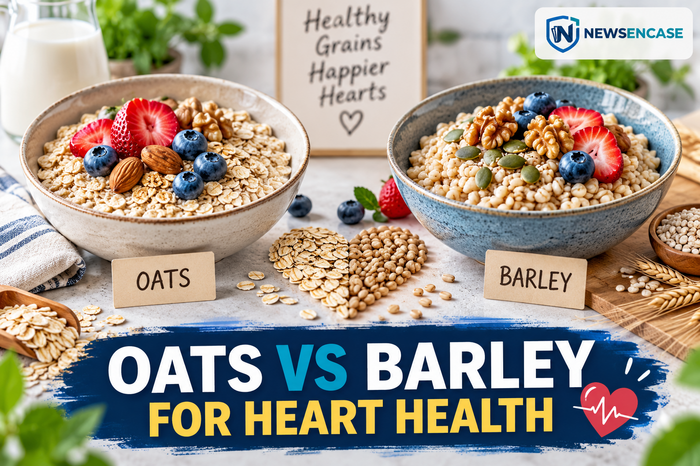
Oats may support healthier LDL cholesterol while barley could benefit blood pressure. Compare the two fibre-rich grains and learn how to use them.
Oats and barley are inexpensive whole grains rich in soluble fibre, but new research suggests they may influence cardiovascular health in slightly different ways.
In a six-week randomised trial involving 68 adults, participants ate several daily servings of either oats, barley or control foods. The oat group showed greater reductions in some measures of LDL cholesterol, including small, dense LDL particles. The barley group recorded improvements in diastolic blood pressure and certain inflammatory markers.
The trial was relatively small, so its findings should not be interpreted as proof that one grain is universally superior. Both contain beta-glucan, a soluble fibre that forms a gel-like substance in the digestive system. This can reduce cholesterol absorption and may support steadier blood-sugar responses.
Oats are easy to use in porridge, overnight oats, smoothies, chilla batter and homemade granola. Barley can be added to soups, khichdi, salads or vegetable dishes. Choosing minimally processed forms and keeping sugary toppings modest will generally provide more benefit than highly sweetened instant products.
People increasing their fibre intake should do so gradually and drink adequate water. A sudden increase can cause gas or abdominal discomfort. Anyone with coeliac disease must select products specifically labelled gluten-free; barley naturally contains gluten, while oats may be contaminated during processing.
Heart health depends on the overall eating pattern rather than one ingredient. Vegetables, fruit, pulses, nuts, seeds and unsaturated fats should accompany whole grains, while excess salt, trans fats and heavily processed foods should remain limited.
The practical conclusion is not oats versus barley, but how to include both. Oats may be particularly useful for cholesterol-conscious meals, while barley offers variety and additional fibre. The combination can make a heart-friendly diet easier to sustain.
About the Author