
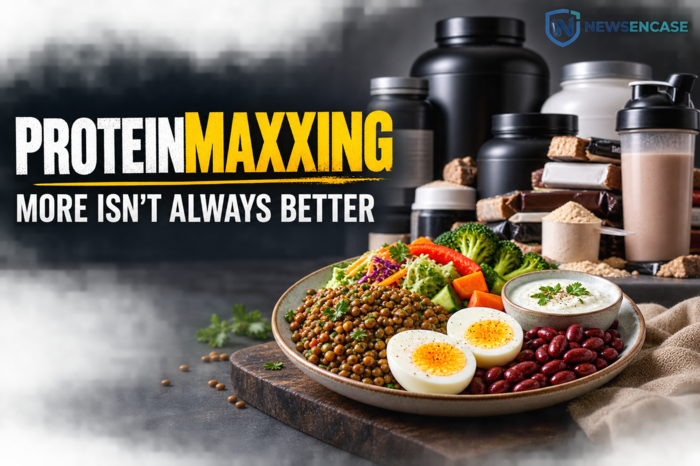
Proteinmaxxing is a major fitness trend, but excessive protein does not guarantee muscle gain and may crowd fibre-rich foods out of the diet.
“Proteinmaxxing” has become one of 2026’s most visible food and fitness trends. Social-media users are adding protein powders, bars and high-protein versions of everyday foods to almost every meal in the hope of gaining muscle, controlling hunger or losing weight.
Protein is essential for repairing tissue and supporting muscle growth, especially when combined with resistance training. But eating increasingly large amounts does not guarantee faster results.
Start With Overall Diet Quality
Individual protein needs vary with body size, age, health and activity level. A sedentary person does not need the same intake as an athlete completing demanding training. Spreading protein across meals is generally more practical than consuming most of it in a single shake or dinner.
Useful sources include eggs, milk, curd, paneer, fish, lean meat, soy foods, beans, lentils and chickpeas. These foods can also supply iron, calcium, fibre or other nutrients that a highly processed snack may lack.
The main risk of proteinmaxxing is displacement. If powders and bars push vegetables, fruit, pulses and whole grains off the plate, the diet may become low in fibre and unnecessarily expensive. Some packaged products are also high in sugar, saturated fat, sodium or sugar alcohols that can cause digestive discomfort.
Supplements Are Optional
Protein powder can be convenient when food intake is limited, but it is not required for muscle growth. Consumers should check serving size, ingredient lists and independent quality testing rather than assuming every product marketed to gym users is necessary.
People with kidney disease, certain metabolic conditions or medically restricted diets should seek individual advice before sharply increasing protein. Anyone pursuing fat loss should also remember that protein-containing foods still contribute calories.
The sensible version of proteinmaxxing is less dramatic: include an appropriate protein source at each main meal, eat enough total food to support training and maintain fibre-rich plant foods. Training, recovery and consistency still matter more than a viral nutrition label.
About the Author