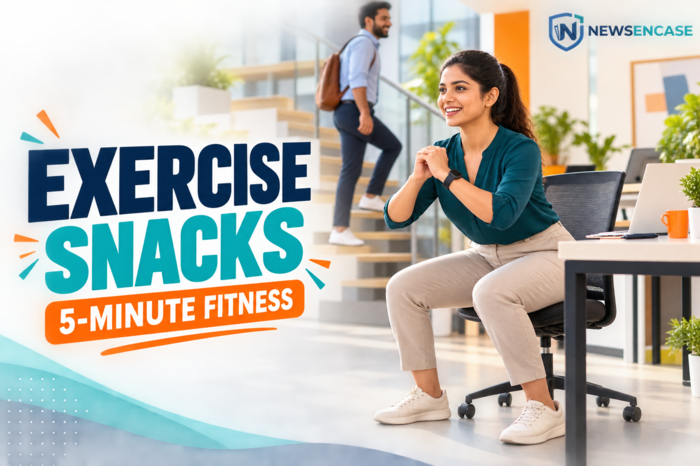
Exercise snacks use short bursts of walking, stairs and strength movements to reduce sitting and help busy people become more active.
Long workouts are not the only way to become more active. “Exercise snacks”—brief bursts of purposeful movement spread across the day—are attracting attention because they are easier to fit around work, family and commuting.
An exercise snack may last from one to ten minutes. Examples include climbing stairs, performing bodyweight squats, walking briskly around the building or completing a short mobility routine between meetings.
Why Short Sessions Can Help
Small activity breaks interrupt prolonged sitting and raise the heart rate without requiring a change of clothes or a trip to the gym. They can also make exercise feel less intimidating for people restarting after a long break.
A simple office routine could include one minute of sit-to-stands, one minute of wall push-ups, one minute of marching, one minute of alternating reverse lunges and one minute of relaxed walking. Beginners can work for 20–30 seconds at a time and use the remainder for recovery.
The intensity should match the person’s fitness. A useful test is whether breathing becomes faster while controlled. People should still be able to stop safely without feeling faint or experiencing chest pain.
Do They Replace Regular Workouts?
Exercise snacks contribute to daily movement, but they should not become an excuse to ignore the broader activity target. The World Health Organization recommends that adults accumulate 150–300 minutes of moderate aerobic activity, or 75–150 minutes of vigorous activity, each week. Muscle-strengthening work should be performed on at least two days.
Short sessions can help build towards those totals. For example, three brisk 10-minute walks provide 30 minutes of activity without requiring one uninterrupted block.
Consistency is the main advantage. Scheduling movement after a familiar cue—such as finishing a call or making tea—can turn it into a repeatable habit. People with balance difficulties, heart conditions or significant joint pain should select appropriate movements with professional guidance.
About the Author