
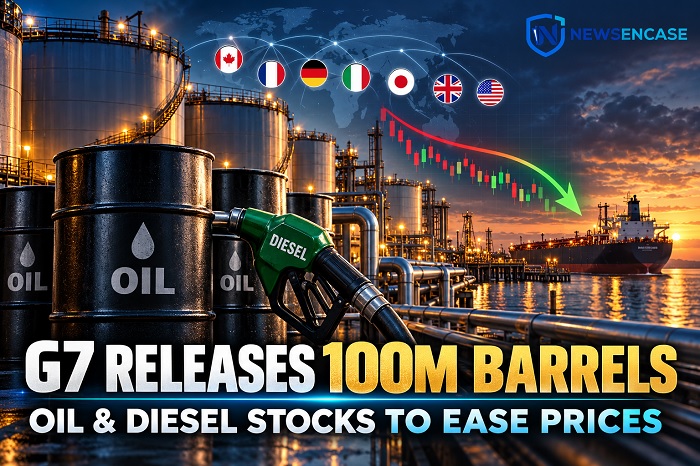
G7 countries will release 100 million barrels of crude oil, diesel and other fuels through the IEA to stabilise supplies and reduce soaring energy prices.
The Group of Seven nations has agreed to release 100 million barrels of crude oil, diesel and other petroleum products from emergency reserves in an attempt to stabilise global energy markets and reduce record fuel prices.
The coordinated release will begin immediately and continue for four months through the International Energy Agency. A substantial share of diesel will be supplied during the first 20 days because refined-fuel markets are facing particularly severe shortages.
G7 Rules Out Restrictions on Energy Exports
The agreement was announced after an emergency videoconference chaired by French President Emmanuel Macron. The talks included leaders from Canada, France, Germany, Italy, Japan, the United Kingdom and the United States, along with European Union representation.
The countries also pledged not to restrict trade in energy and petroleum products among partner nations. The commitment reduces the likelihood of a proposed US diesel-export ban, which European governments had warned could further disrupt international fuel supplies.
US President Donald Trump subsequently said his administration would not impose the export ban.
The G7 also urged other oil and fuel-producing countries to avoid export restrictions that could intensify shortages.
Why Diesel Prices Have Surged
The emergency action follows sharp increases in crude-oil and diesel prices linked to disruptions in the Middle East, restricted exports from Russia and reduced availability of refined products.
Damage to refineries and interruptions affecting Persian Gulf shipping routes have constrained fuel supplies. Russia’s restrictions on diesel exports have added further pressure by forcing some importers to compete for alternative supplies.
Diesel is essential for trucks, agricultural machinery, construction equipment and industrial transport. Higher diesel prices can therefore raise the cost of food, manufactured goods and freight even for consumers who do not directly purchase the fuel.
The average US diesel price reportedly reached $6.37 per gallon on October 2 after touching a record $6.52 in September. Prices also reached unusually high levels in parts of Europe.
Oil and Diesel Futures Fall
Energy markets initially responded positively to the announcement.
December Brent crude fell to approximately $101.23 per barrel, while West Texas Intermediate declined to around $90.70. European gasoil futures dropped by more than 7%, and US ultra-low-sulphur diesel futures fell by nearly 4%.
The decline indicated that traders expect the emergency barrels to improve short-term availability. However, continued tensions in the Middle East and tight global inventories could limit the duration of the relief.
Will the Release Lower Petrol and Diesel Prices in India?
India imports most of the crude oil it consumes, making domestic energy costs sensitive to international prices and the rupee-dollar exchange rate.
A sustained fall in global crude and refined-product prices could reduce India’s import bill and ease cost pressures on oil-marketing companies. Lower diesel prices internationally could also benefit aviation, freight, agriculture and industries dependent on transport.
However, the G7 decision does not guarantee an immediate reduction in retail petrol or diesel prices in India. Domestic prices also depend on taxation, refining costs, currency movements, freight charges and decisions taken by oil companies and the government.
Questions Over Emergency Reserves
The G7 release is intended as a temporary market-stabilisation measure rather than a permanent solution to supply shortages.
Analysts have warned that participating countries will eventually need to replenish the emergency reserves. Buying back the fuel could become expensive if energy prices remain elevated.
There is also uncertainty over whether the 100-million-barrel commitment is entirely additional to a larger IEA reserve release announced earlier in 2026 or represents the remaining portion of that programme.
The plan may nevertheless provide immediate relief by increasing market liquidity, reducing fears of export restrictions and making more diesel available during the most severe phase of the shortage.
About the Author