
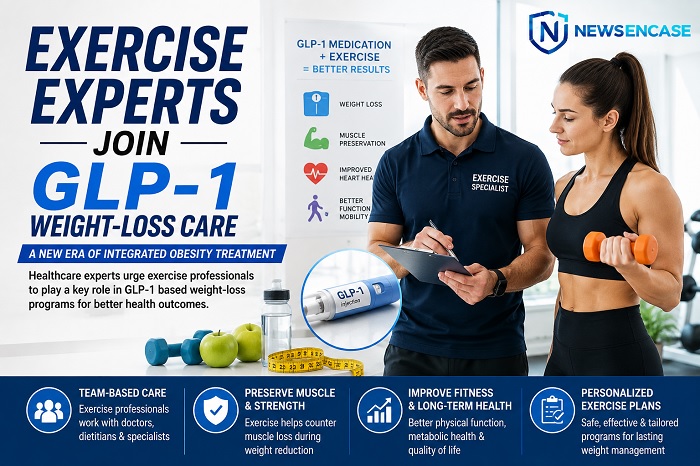
Exercise specialists are being urged to play a much bigger role in GLP-1-based obesity treatment, as health organizations increasingly emphasize that successful weight management should protect muscle, physical function and long-term health—not simply reduce the number on the scale.
A coalition of 12 international exercise and health organizations, including the Canadian Society for Exercise Physiology (CSEP), has called for qualified exercise professionals to be integrated into multidisciplinary obesity-care teams alongside physicians, dietitians and other healthcare providers.
Why Exercise Matters With GLP-1 Drugs
GLP-1-based medications can produce substantial weight loss, but researchers and clinicians are paying closer attention to changes in lean body mass, muscle strength and physical fitness during treatment.
The new joint statement argues that clinical exercise physiologists can provide individualized exercise programs designed to preserve muscle mass, maintain physical function and improve longer-term health outcomes during weight-loss treatment.
Research published in 2026 also found that combining exercise with GLP-1 receptor agonist treatment produced meaningful improvements in cardiorespiratory fitness and physical function, whereas GLP-1 treatment alone was not sufficient to produce comparable fitness improvements.
GLP-1 Weight Loss Doesn’t Automatically Mean More Activity
Another recent finding strengthens the case for structured exercise support.
Research presented at ENDO 2026 found that physical activity actually declined after participants started GLP-1 medication. Average daily steps dropped from 5,047 to 4,487, while moderate-to-vigorous physical activity declined from 28 to 22 minutes per day. Researchers found no evidence that medication-induced weight loss automatically encouraged people to become more physically active.
That distinction is important: losing weight and becoming physically fit are not necessarily the same thing.
Resistance Training Takes Greater Priority
Exercise experts are particularly emphasizing resistance and weight-bearing exercise. Along with cardiovascular activity, strength training can help maintain muscle and support bone health while body weight is falling.
Recent expert guidance recommends working toward roughly 150 minutes of moderate-intensity activity or 75 minutes of vigorous activity each week, alongside resistance training about twice weekly, although exercise plans should be individualized.
Concerns extend to bone health as well. Experts note that substantial weight loss can reduce mechanical loading on bones, while lower food intake may make adequate protein, calcium and vitamin D consumption more challenging. Weight-bearing and resistance exercise are therefore being highlighted as important components of GLP-1 care.
Obesity Care Moves Beyond the Scale
The shift reflects a broader change in obesity treatment. The World Health Organization describes obesity as a chronic disease requiring comprehensive, lifelong care and says GLP-1 therapy should be considered within an integrated approach rather than as a standalone solution.
The emerging message for people using GLP-1 medicines is therefore straightforward: medication can be an effective weight-management tool, but exercise remains important for fitness, strength, mobility and long-term health.
People taking prescription weight-loss medication should discuss major changes to their exercise or nutrition program with their healthcare team, particularly if they have existing medical conditions.
About the Author