
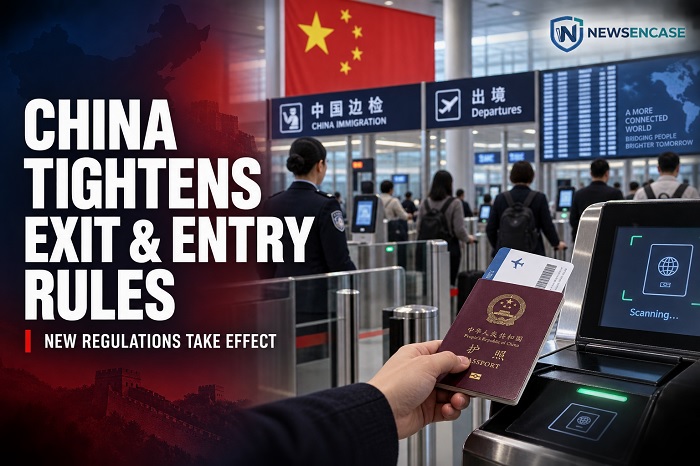
China’s new exit-and-entry regulations introduce technology-security travel restrictions, tougher visa checks and stronger penalties for false documents.
China has implemented new exit-and-entry regulations that expand scrutiny of travellers, strengthen penalties for false immigration documents and introduce travel restrictions linked to national and technological security.
The 19-article framework, issued under State Council Decree No. 841, took effect on September 15, 2026. Chinese authorities say the regulations are intended to standardise border administration, protect travellers’ lawful rights and safeguard national security and interests.
Technology-Security Exit Restrictions
The regulations allow authorities to prevent Chinese citizens from leaving the country when alleged violations of export controls or technology import-and-export rules could threaten industrial or technological security.
Citizens returning to China after committing certain illegal or criminal acts overseas that harm national security or national interests may face exit restrictions lasting between six months and three years. Travel controls have previously applied to officials and employees with access to confidential information, but the new rules provide a broader formal framework.
The provisions also permit immigration authorities to issue warnings or discourage Chinese citizens from travelling to areas affected by armed conflict or other serious security threats.
Tougher Checks for Foreign Travellers
Visa, entry, stay and residence applications will face stronger verification. Authorities can request supporting documents, electronic information and other evidence to confirm an applicant’s identity and travel purpose.
Foreign nationals who submit false documents or statements while applying for a visa or seeking entry may be barred from China for between one and five years.
Sponsors and organisations issuing invitation letters are now explicitly responsible for ensuring that the information they provide is accurate. Individuals and companies may face financial penalties for supplying fabricated or misleading documents.
New Rules for Immigration Agencies
Companies providing immigration consultation, application assistance or document-processing services in China must register with local immigration authorities. Existing providers have been given 90 days from the regulations’ effective date to complete the required filing.
Agencies must maintain qualified staff, protect personal information and establish internal compliance systems. Serious violations may result in fines, suspension or loss of business licences.
The rules do not create new visa categories, but foreign visitors, employers and business travellers should expect greater examination of applications and supporting documents. Implementation may differ between provinces as authorities release further local guidance.
About the Author