
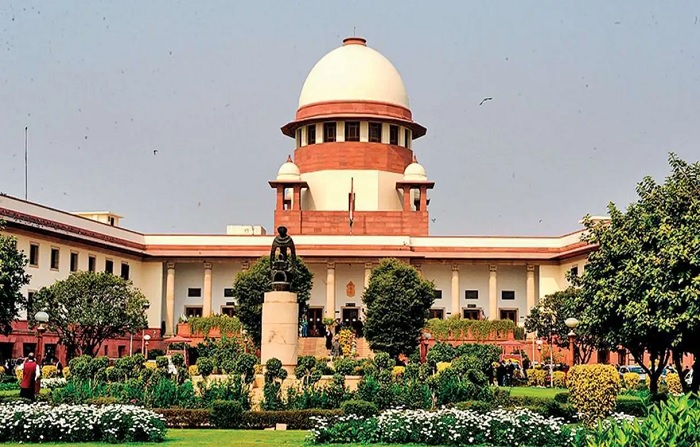
New Delhi: The Central Government has officially notified the appointment of five new judges to the Supreme Court of India, following recommendations made by the Supreme Court Collegium in meetings held on May 22 and May 27.
The appointments include four serving Chief Justices of High Courts and Senior Advocate V. Mohana, marking a significant expansion of the apex court’s strength and boosting women’s representation in the judiciary.
Five New Supreme Court Judges Appointed
The following individuals have been elevated as judges of the Supreme Court:
- Justice Sheel Nagu, Chief Justice of the Punjab and Haryana High Court
- Justice Shree Chandrashekhar, Chief Justice of the Bombay High Court
- Justice Sanjeev Sachdeva, Chief Justice of the Madhya Pradesh High Court
- Justice Arun Palli, Chief Justice of the High Court of Jammu & Kashmir and Ladakh
- Senior Advocate V. Mohana
Union Law Minister Arjun Ram Meghwal announced the appointments through a social media post on Tuesday.
V. Mohana’s Elevation Boosts Women’s Representation
The appointment of Senior Advocate V. Mohana is being viewed as a significant step toward improving gender representation in the Supreme Court.
Currently, the apex court has only one sitting woman judge, Justice B.V. Nagarathna. Notably, no woman judge has been appointed to the Supreme Court since August 2021, making Mohana’s elevation particularly significant.
Supreme Court Strength Increased to 38 Judges
Recently, the sanctioned strength of the Supreme Court was increased from 34 to 38 judges, including the Chief Justice of India.
At present, the court is functioning with 32 judges, and the latest appointments will help fill existing vacancies. Additionally, two more vacancies are expected later this month following the retirement of Justice J.K. Maheshwari and Justice Pankaj Mithal.
Collegium Recommendations Implemented
The appointments were based on recommendations made by the Supreme Court Collegium, which is responsible for selecting and recommending judges for appointments to the higher judiciary.
Legal experts believe the new appointments will strengthen the Supreme Court’s capacity to handle its growing caseload while ensuring broader representation across regions and judicial backgrounds.
The latest elevations come at a crucial time for India’s judiciary as the Supreme Court continues to deal with a substantial backlog of constitutional, civil, and criminal matters.
About the Author


