
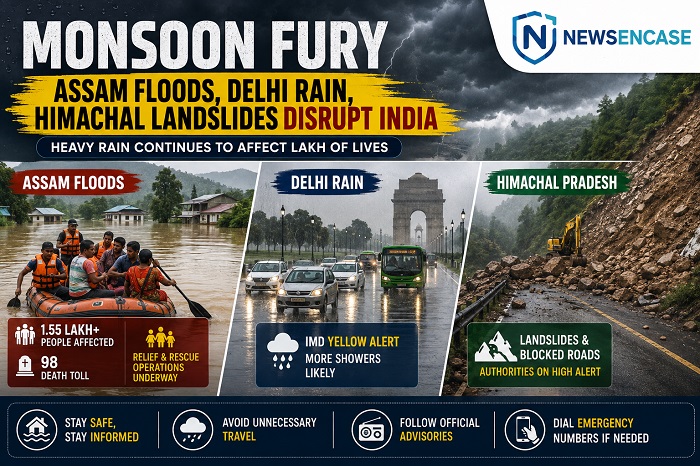
Assam floods have affected over 1.55 lakh people, while Delhi faces fresh rain and Himachal Pradesh battles landslides and road disruptions as India’s monsoon remains active.
New Delhi: The southwest monsoon continues to create serious challenges across several parts of India, with Assam facing a major flood crisis, Delhi witnessing fresh spells of heavy rain, and Himachal Pradesh dealing with landslides, blocked roads and damage to essential infrastructure. Authorities in affected states remain on alert as further rainfall could worsen conditions in vulnerable areas.
The latest developments highlight the uneven but intense impact of the monsoon across the country, with flooding in the Northeast and landslide risks in the Himalayan region occurring alongside repeated heavy-rain spells in the national capital.
Assam Flood Crisis: Death Toll Reaches 98
The situation in Assam remains particularly concerning. More than 1.55 lakh people across 13 districts are still affected by flooding, while the death toll from this year’s deluge has risen to 98, according to reports published on August 8.
Floodwaters have affected communities, agricultural land and infrastructure, putting additional pressure on local administration and relief agencies. Authorities are continuing relief and rehabilitation operations in affected areas.
A significant next step will be a door-to-door damage assessment, scheduled to begin on August 9. Officials will assess damage to houses, livelihoods and other property so that rehabilitation and compensation measures can be planned more effectively.
The continuing flood situation is being closely monitored as water levels and rainfall conditions can change rapidly. Residents in vulnerable areas have been advised to follow instructions issued by local authorities and disaster-management agencies.
Delhi Receives Another Spell of Rain
The national capital also experienced another spell of rainfall on Saturday, August 8, with several areas receiving light to moderate showers. The India Meteorological Department issued a yellow alert, indicating the possibility of additional rain and weather-related disruption.
Delhi’s recurring heavy-rain episodes have previously resulted in waterlogging, traffic congestion and disruption to normal commuting. Low-lying roads and underpasses are particularly vulnerable when intense rainfall occurs over a short period.
The latest spell has again brought attention to the capital’s drainage capacity and preparedness for extreme rainfall. Commuters are being advised to check traffic and weather updates before travelling, particularly during periods of intense rain.
Earlier monsoon spells have caused significant disruption across Delhi-NCR. During one major July episode, heavy rainfall resulted in widespread waterlogging and severe traffic congestion, prompting the IMD to issue higher-level weather warnings.
Himachal Pradesh Faces Landslide and Road Risks
Himachal Pradesh remains another major area of concern because of the combination of heavy rainfall, steep terrain and saturated soil. Landslides, flash floods and falling debris have repeatedly disrupted road connectivity and essential services during the current monsoon season.
Recent official-state data cited by news reports showed extensive infrastructure disruption, with 179 roads blocked, along with dozens of electricity transformers and drinking-water schemes affected during an earlier phase of the ongoing heavy-rain spell. Mandi, Kullu, Chamba and Sirmaur have been among the worst-affected districts.
The IMD has repeatedly warned of landslides, mudslides, flash floods and falling rocks in vulnerable parts of the state during intense rainfall.
For residents and tourists, the major concern is that landslides can occur suddenly, particularly along mountain roads, river valleys and areas where the ground has already become saturated. Authorities have therefore been working to clear debris and restore connectivity where roads are blocked.
Monsoon Remains a Major National Challenge
The latest developments in Assam, Delhi and Himachal Pradesh demonstrate how India’s monsoon can produce very different hazards across regions. In Assam, the primary concern is prolonged flooding and displacement, while in Himachal Pradesh the combination of rainfall and mountainous terrain increases the danger of landslides and flash floods. In Delhi, intense rainfall can quickly translate into urban flooding and traffic disruption.
The situation also presents challenges for agriculture, transport, electricity supply, drinking-water systems and local economies. Repeated flooding can damage crops and homes, while road blockages in mountainous states can isolate communities and disrupt the movement of essential supplies.
Weather-related disruptions are particularly significant during periods of sustained rainfall because saturated soil and swollen rivers leave less capacity to absorb additional water.
Authorities Maintain Vigilance
With the monsoon still active, disaster-management authorities across affected states are maintaining preparedness for further weather-related emergencies. Residents in flood-prone and landslide-prone locations are being urged to monitor official advisories and avoid unnecessary travel during periods of intense rainfall.
For travellers heading to Himachal Pradesh and other mountainous destinations, checking road conditions and local weather warnings before starting a journey remains especially important.
The immediate priority in Assam is relief, rehabilitation and assessment of flood damage, while Delhi continues to monitor rainfall-related urban disruption. In Himachal Pradesh, restoring roads and protecting vulnerable communities remain key challenges.
As further rain is forecast in different parts of the country, the coming days will be crucial for determining whether floodwaters recede or whether additional rainfall creates fresh problems.
About the Author


