
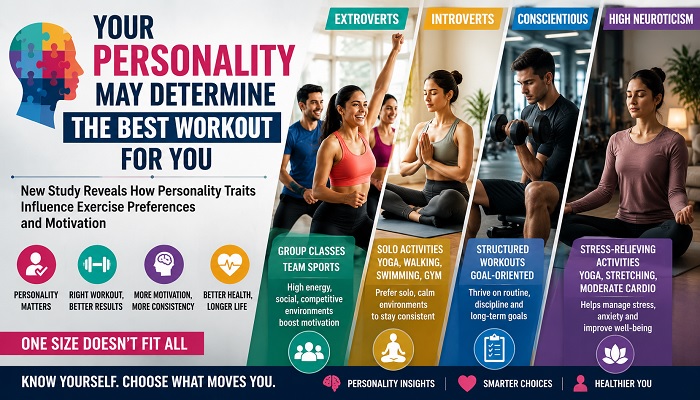
A new study reveals that personality traits influence exercise preferences and motivation, suggesting personalized workout plans can improve fitness consistency and long-term health.
New Delhi: A new study suggests that personality traits play a significant role in determining which types of exercise people enjoy and are most likely to stick with, highlighting the importance of tailoring fitness routines to individual preferences rather than following a one-size-fits-all approach.
Researchers found that people with different personality characteristics respond differently to various forms of physical activity. Matching workouts to an individual’s personality could improve motivation, consistency, and long-term health outcomes.
According to the study, extroverts are generally more inclined toward high-energy group workouts, team sports, and social fitness classes, where interaction and competition boost motivation. On the other hand, introverts often prefer solo activities such as walking, yoga, swimming, or strength training, allowing them to exercise in quieter environments.
Individuals who score high on conscientiousness are more likely to maintain structured workout routines and stick to long-term fitness goals. Meanwhile, people with higher levels of neuroticism may benefit from stress-relieving activities like yoga, stretching, or moderate aerobic exercise, which can help reduce anxiety and improve mental well-being.
Health experts say understanding personality differences could help fitness trainers, healthcare professionals, and digital fitness platforms create more personalized exercise plans. Such an approach may increase adherence to physical activity and reduce the likelihood of people abandoning their fitness goals.
The findings also reinforce the growing trend toward personalized wellness, where exercise recommendations are tailored to an individual’s lifestyle, preferences, and psychological profile rather than focusing solely on physical fitness.
Researchers believe that choosing an enjoyable workout is just as important as choosing an effective one, as people are far more likely to remain physically active when they genuinely enjoy the activity.
About the Author


