A proposed peace agreement between the United States and Iran appears closer than ever, but uncertainty remains over when the deal will be formally signed and what its final terms will include.
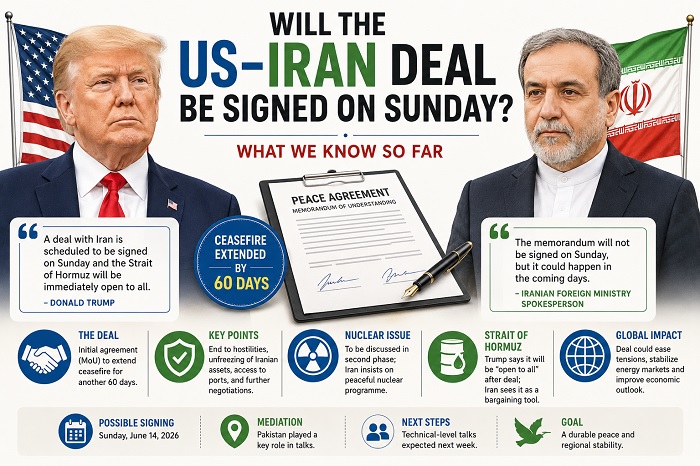
US President Donald Trump has claimed that the first stage of a peace deal with Iran is scheduled to be signed on Sunday, potentially marking a major step toward ending more than 100 days of conflict that has disrupted global energy markets and heightened geopolitical tensions.
However, Iranian officials have disputed the timeline, saying the agreement is unlikely to be signed on Sunday but could be finalized in the coming days.
Trump Says Deal Imminent
Trump recently stated that a memorandum of understanding (MoU) between Washington and Tehran would extend the current ceasefire for another 60 days and pave the way for broader negotiations.
In a social media post, he said the agreement would create a “wall to no nuclear weapon,” claiming Iran would commit to never acquiring nuclear weapons through development, purchase or any other means.
The US president also suggested that the Strait of Hormuz could reopen to all international shipping immediately after the agreement takes effect.
Iran Signals Progress but Remains Cautious
Iranian Foreign Minister Abbas Araghchi acknowledged that an agreement has “never been closer,” but stressed that negotiations remain ongoing.
According to Iranian officials, the proposed memorandum includes provisions for ending hostilities, easing restrictions on Iranian ports, releasing frozen Iranian assets and beginning discussions on broader sanctions relief.
Tehran has maintained that issues surrounding its nuclear programme will be addressed during a second phase of negotiations following the signing of the initial agreement.
Major Sticking Points Remain
Despite signs of progress, several contentious issues continue to complicate negotiations.
The future of Iran’s nuclear programme remains the most significant obstacle. While the US insists Iran must never possess nuclear weapons or the capability to develop them, Tehran continues to maintain that its nuclear activities are intended solely for civilian purposes.
Sanctions relief is another major area of disagreement. Iran seeks the removal of long-standing US sanctions that have severely impacted its economy, while Washington appears to favour a phased approach linked to Iranian compliance.
The fate of billions of dollars in frozen Iranian assets and the security situation in Lebanon also remain key topics under discussion.
Strait of Hormuz Remains Critical Issue
The Strait of Hormuz, one of the world’s most important energy transit routes, remains central to negotiations.
Before the conflict, nearly one-fifth of global oil and liquefied natural gas supplies passed through the strategic waterway. Iran has previously restricted access to the strait and views it as a major bargaining tool in discussions with the United States.
While Trump has suggested the waterway would reopen under the proposed agreement, Iran has indicated it may continue to exercise authority over transit arrangements and shipping regulations in the region.
Global Reactions Mixed
International reactions to the potential deal have been mixed. UK Prime Minister Keir Starmer welcomed efforts to secure a lasting peace, while several US lawmakers expressed scepticism about the agreement’s effectiveness.
In Israel, reports of an imminent deal have sparked debate among political analysts and commentators, with concerns that the agreement could strengthen Iran’s regional influence.
As negotiations continue, attention is focused on whether Washington and Tehran can bridge remaining differences and transform the preliminary memorandum into a broader and lasting peace framework for the Middle East.
About the Author