
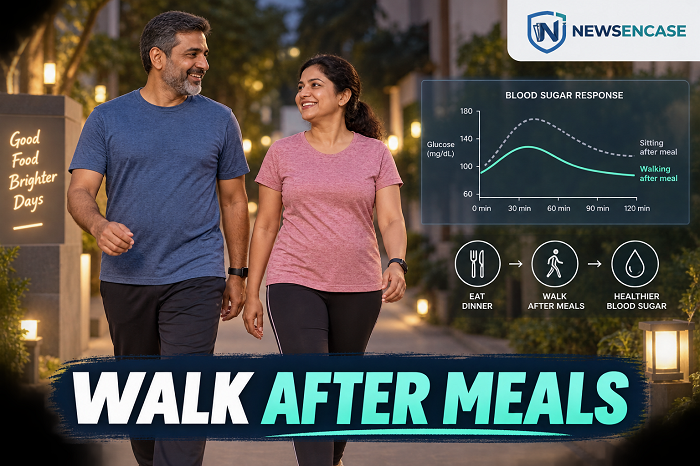
A short walk soon after eating may reduce post-meal blood-sugar spikes. Learn how long to walk and who should take additional precautions.
A short walk soon after eating may reduce the rise in blood glucose that commonly follows a meal, research suggests.
When muscles contract during walking, they use glucose for energy. This can help move some circulating glucose into muscle cells and moderate the post-meal spike. Timing appears important: a systematic review concluded that walking as soon as practical after eating produced a greater immediate benefit than exercising before a meal or waiting longer afterwards.
The walk does not have to be long or intense. Studies have examined sessions ranging from 10 to 30 minutes, while earlier research found that three 15-minute post-meal walks improved daily glucose control in older adults at risk of impaired glucose tolerance.
A comfortable pace is a sensible starting point. People can walk around their neighbourhood, inside a building or even perform gentle marching at home when weather or safety is a concern. Consistency after the largest meal may be more realistic than walking after every meal.
Walking is not a substitute for diabetes medication, insulin or a clinician-directed eating plan. Glucose responses vary according to meal size, carbohydrate content, fitness, medication and individual metabolism.
People using insulin or medicines that can cause low blood sugar should understand their personal response to exercise. Carrying a fast-acting carbohydrate and monitoring glucose may be necessary based on clinical advice. Those with foot ulcers, balance problems or cardiovascular symptoms require an appropriate activity plan.
For most healthy adults, a gentle post-meal walk is a low-cost habit that also reduces sitting and adds to weekly physical activity. Starting with 10 minutes after dinner and adjusting gradually can make the routine sustainable.
About the Author