
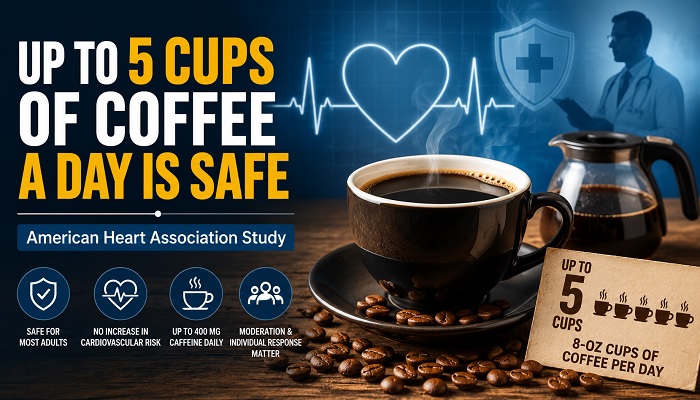
A new American Heart Association study says most adults can safely drink up to five cups of coffee daily without increasing heart disease risk, while warning against excessive caffeine from energy drinks.
Washington: Drinking up to five 8-ounce cups of caffeinated coffee a day is generally safe for most healthy adults and does not increase the risk of cardiovascular disease, according to a new scientific statement released by the American Heart Association (AHA).
Published in the peer-reviewed journal Circulation, the review analyzed the latest evidence on caffeine and heart health. Researchers concluded that consuming up to 400 mg of caffeine per day, mainly through black coffee without added sugar or cream, is considered safe for most adults and may even offer certain cardiovascular benefits.
The report found that drinking two to four cups of coffee daily may be associated with a lower risk of heart disease, heart failure, stroke, Type 2 diabetes, and some irregular heart rhythms. However, researchers cautioned that consuming more than four cups a day could increase the risk of heart failure in some individuals.
Experts also warned against relying on energy drinks and energy shots, which often contain much higher concentrations of caffeine than regular coffee. These beverages have been linked to elevated blood pressure, abnormal heart rhythms, and other cardiovascular concerns.
The AHA emphasized that caffeine affects people differently depending on factors such as age, genetics, medications, underlying health conditions, and metabolism. While moderate coffee consumption appears safe for most people, some individuals may experience side effects including heart palpitations, anxiety, increased blood pressure, or sleep disturbances.
Researchers stressed that there is no one-size-fits-all recommendation for caffeine intake and advised people to monitor their body’s response to caffeine and consult healthcare professionals if they have underlying heart conditions or other medical concerns.
The statement also called for more clinical research to better understand how different caffeine sources—including tea, soft drinks, energy drinks, and supplements—affect long-term cardiovascular health.
About the Author


