
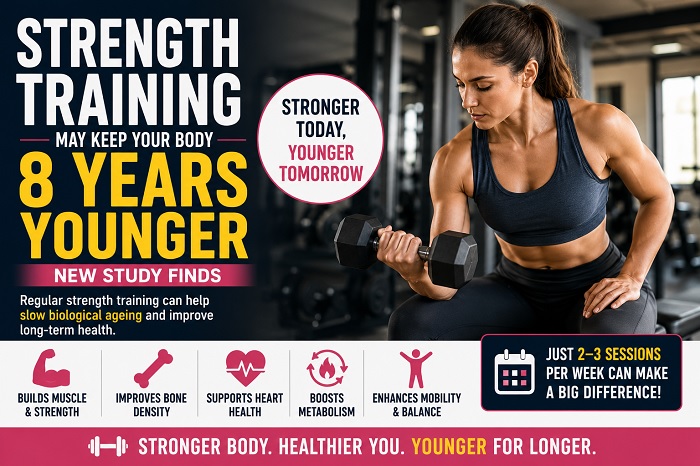
A new study suggests regular strength training may slow biological ageing by up to eight years. Learn how resistance exercise benefits muscle health, metabolism, heart health, and longevity.
New Delhi: Regular strength training could help keep your body biologically younger and improve long-term health, according to a new study that highlights the powerful benefits of resistance exercise. Researchers found that people who consistently performed strength-based workouts showed signs of slower biological ageing, potentially making their bodies appear up to eight years younger than their actual age.
The study adds to growing evidence that lifting weights and performing resistance exercises do more than build muscle—they may also improve overall health, mobility, and longevity.
Researchers found that strength training supports muscle mass, bone density, metabolism, and cardiovascular health, while also helping reduce the risk of chronic diseases associated with ageing.
Experts say regular resistance exercise can improve balance, posture, flexibility, and joint stability, lowering the risk of falls and injuries, particularly among older adults. It also plays a key role in maintaining independence and quality of life as people age.
The findings suggest that even two to three strength-training sessions per week, combined with a balanced diet and adequate recovery, can deliver significant long-term health benefits. Exercises such as squats, lunges, push-ups, resistance band workouts, and weightlifting are among the recommended activities.
Health professionals caution that beginners should start gradually, use proper technique, and seek guidance from certified fitness trainers if necessary to avoid injury.
While genetics and lifestyle factors also influence biological ageing, researchers believe that incorporating regular strength training into a healthy routine can significantly improve physical function and support healthy ageing.
About the Author


