Explore common Navratri fasting foods, ingredients usually avoided during vrat, and how food traditions differ across families and regions.
Navratri fasting brings a change to everyday meals, but there is no single food list followed by every household. Some devotees eat fruit and dairy, others have one cooked vrat meal, and some do not fast at all. Understanding your family’s custom is the best starting point for planning a Navratri menu.
What Can You Eat During Navratri Vrat?
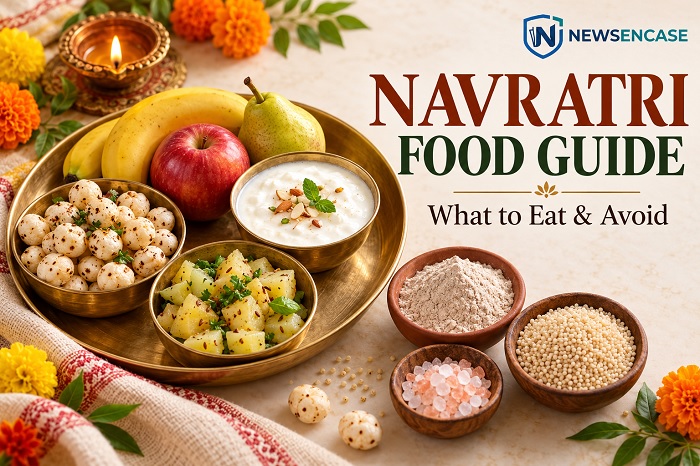
Common choices in many North Indian fasting traditions include fresh fruit, milk, curd, potatoes, sweet potatoes, makhana, peanuts and nuts. Kuttu, singhara and rajgira flours are often used for rotis, cheelas and other preparations. Sabudana and samak, a millet commonly sold as “vrat rice”, are also familiar ingredients.
Sendha namak, or rock salt, generally replaces ordinary table salt in households that allow salted fasting meals. Use only the vegetables, spices and dairy products accepted in your own tradition.
Foods Commonly Avoided
Many fasting households leave out wheat, ordinary rice, maida, pulses, onion, garlic, meat, fish, eggs and alcohol. These are common practices rather than a universal rule for all Navratri observances.
Check packaged foods before using them: a snack marketed as suitable for fasting may contain flour, salt or seasoning that your household avoids.
Why Family Traditions Differ
Rules may vary for tomatoes, particular spices, cooking oils and the number of meals eaten. Some families observe all nine days, while others fast on selected days. Do not assume that a relative’s menu, restaurant thali or online recipe follows the same restrictions as yours.
If uncertain, ask the family member who normally organises the vrat or your religious adviser. Also distinguish fasting meals from food served as festive bhog; they need not use identical ingredients.
Simple Meal-Planning Ideas
Prepare a short menu before shopping. Depending on your customs, options could include fruit and curd for breakfast, samak with permitted vegetables for lunch, roasted makhana for a snack and kuttu cheela for dinner.
Vary dishes rather than relying on one fried snack throughout the fast. People with diabetes should discuss fasting and medication planning with their healthcare team beforehand.
About the Author