
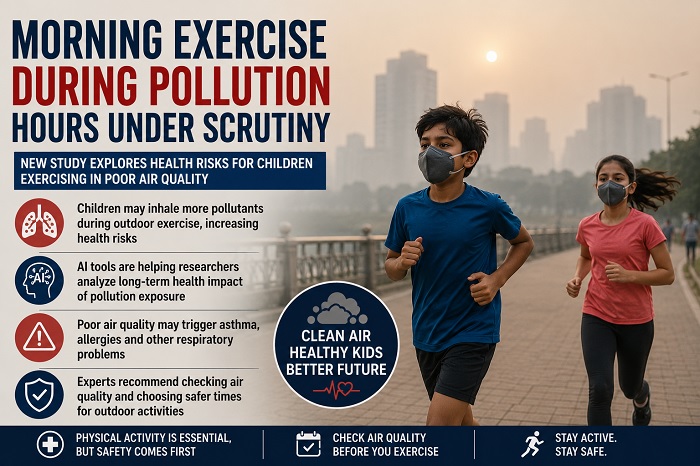
A new AI-backed study suggests children exercising outdoors during poor air quality may inhale more pollutants, increasing the risk of long-term respiratory and cardiovascular health problems.
New Delhi: A new study has raised concerns about the health impact of outdoor exercise during periods of poor air quality, suggesting that children who engage in physical activity in polluted environments may inhale significantly higher levels of harmful pollutants.
Researchers are using artificial intelligence (AI) to better understand how exposure to air pollution during exercise affects children’s long-term health. Since breathing rates increase during physical activity, children exercising outdoors may absorb more fine particulate matter and other pollutants into their lungs than during normal daily activities.
According to the researchers, the study aims to identify how air pollution interacts with physical activity and whether exercising during periods of poor air quality could increase the risk of respiratory illnesses, cardiovascular problems, and reduced lung function over time.
Children are considered particularly vulnerable because their lungs are still developing, and they typically breathe faster than adults during exercise. Experts say prolonged exposure to polluted air may also contribute to asthma flare-ups, allergies, and other chronic respiratory conditions.
The AI-based research analyzes pollution levels, weather conditions, exercise patterns, and health data to better predict potential risks and recommend safer times for outdoor activities. The findings could help schools, parents, and public health authorities make informed decisions about children’s sports and outdoor exercise.
Health experts continue to emphasize that physical activity remains essential for children’s overall health, but recommend checking local air quality before planning outdoor workouts. On days with poor air quality, indoor exercise or activities in well-ventilated spaces may be a safer alternative.
Researchers say the study could support future public health policies aimed at protecting children from the combined effects of pollution and physical exertion while encouraging active lifestyles.
About the Author


