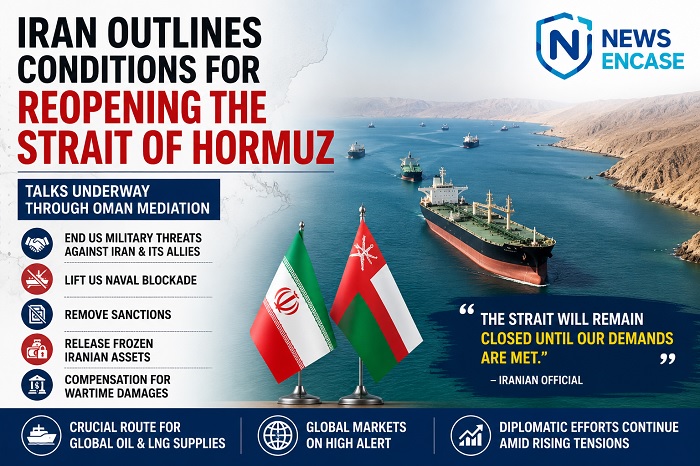
Iran has outlined conditions for reopening the Strait of Hormuz, including lifting sanctions, ending the US naval blockade and releasing frozen Iranian assets as Oman-mediated talks continue.
Iran Strait of Hormuz reopening
Tehran: Iran has outlined a series of conditions that it says must be addressed before the Strait of Hormuz can fully reopen to commercial shipping, adding another complication to diplomatic efforts aimed at restoring traffic through one of the world’s most important energy routes.
According to the latest reports, Iran and Oman are working toward an arrangement for managing shipping through the waterway. However, Tehran has made clear that a broader reopening remains dependent on the United States meeting several demands. The development comes amid continuing tensions between Iran and the US following months of military confrontation and an unsettled ceasefire framework.
What Is Iran Demanding?
Iran’s demands reportedly include an end to US military threats and operations against Iran and its regional allies, the lifting of the US naval blockade, withdrawal of American forces from the region, removal of sanctions and compensation for wartime damage.
Tehran has also called for the release of frozen Iranian assets held overseas. Iranian officials have indicated that the Strait will remain closed until Washington changes its approach and addresses these demands.
Iranian officials have also said that they are communicating with Washington through intermediaries rather than conducting direct negotiations. The position reflects Tehran’s broader insistence that previous US commitments must be addressed before negotiations over the waterway can progress.
Oman Plays Key Role in Shipping Discussions
Oman has emerged as an important intermediary in efforts to establish a temporary framework for maritime traffic. Reuters reports that Iran is finalising an arrangement with Oman covering new shipping lanes through the Strait, although Tehran’s wider conditions remain a major obstacle to a full reopening.
The proposed arrangements could provide a controlled route for commercial vessels, potentially allowing shipping to resume under specific conditions. However, a limited or supervised transit arrangement would not necessarily represent a return to normal commercial operations.
Why the Strait of Hormuz Matters
The Strait of Hormuz, located between Iran and Oman, is a critical chokepoint for global energy supplies. Oil, refined petroleum products and liquefied natural gas move through the waterway to international markets.
Any prolonged disruption can affect shipping costs, insurance premiums, oil prices and broader inflationary pressures. Analysts have stressed that the Strait should not be considered commercially “open” simply because individual vessels are able to pass. A genuine reopening would require sustained traffic, safe navigation, adequate insurance and confidence among international shipping companies.
Global Energy Markets Remain on Alert
The uncertainty surrounding Hormuz continues to create risks for global energy markets. Shipping companies and energy traders are closely monitoring diplomatic developments because a stable reopening could ease supply concerns, while continued restrictions could keep transportation costs and market volatility elevated.
The situation is also significant for major Asian energy importers, which rely heavily on Gulf oil and gas supplies.
What Happens Next?
The immediate focus is on the Iran-Oman shipping discussions and whether they can produce a workable mechanism for commercial vessels. At the same time, the larger diplomatic dispute between Tehran and Washington remains unresolved.
Iran’s conditions represent a substantial negotiating challenge for the United States, particularly demands involving sanctions, military forces and financial compensation. For now, hopes of a full and unrestricted reopening remain uncertain.
A sustained reopening of the Strait would be a major development for international trade and energy markets. Until shipping confidence returns and a broader political agreement is reached, however, Hormuz remains one of the world’s most closely watched geopolitical and economic flashpoints.
About the Author