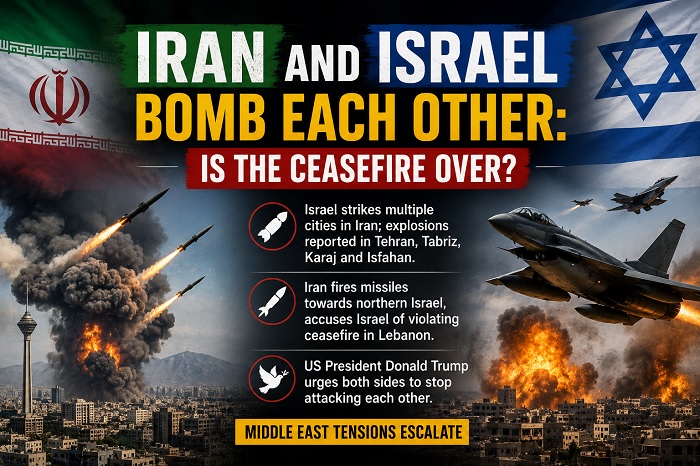
Tehran/Jerusalem: Tensions between Iran and Israel have escalated sharply after both countries exchanged fresh attacks, raising concerns that the fragile ceasefire established in April may be at risk.
Israel launched overnight strikes across multiple Iranian cities, including Tehran, Tabriz, Karaj, and Isfahan. The attacks mark one of the most serious flare-ups since the ceasefire came into effect, with explosions reported at several locations.
The Israeli strikes followed a wave of Iranian missile launches targeting northern Israel. Tehran accused Israel of repeatedly violating the ceasefire through ongoing military operations in Lebanon, where Israeli forces continue to conduct operations against Hezbollah, Iran’s key regional ally.
Iranian officials argued that the missile attacks were a response to what they described as continued Israeli aggression in the region. Israel, however, maintains that its operations in Lebanon are focused on preventing threats posed by Hezbollah and are necessary for national security.
Amid the growing tensions, US President Donald Trump called on both nations to halt further military action.
In a post on his Truth Social platform, Trump urged both sides to immediately stop attacking each other, signaling Washington’s concern over the possibility of a broader regional conflict.
Political analysts suggest that differences may be emerging between the United States and Israel regarding the future approach toward Iran, particularly concerning diplomatic engagement and regional security strategy.
The latest exchange of attacks has heightened fears of a renewed confrontation in the Middle East, with international observers closely monitoring developments to determine whether the ceasefire can survive the escalating hostilities.
About the Author