
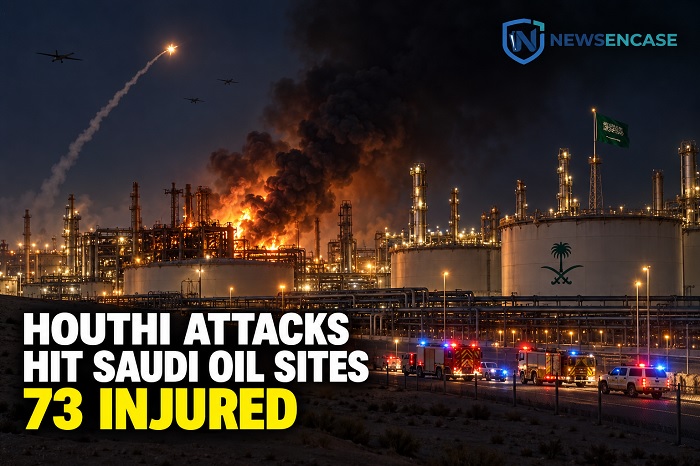
Houthi drone and missile attacks hit Saudi energy facilities in four southern cities, injuring 73 people and pushing oil prices higher.
Yemen’s Iran-aligned Houthi movement launched a major wave of drone and ballistic-missile attacks against southern Saudi Arabia on September 8, injuring 73 people and temporarily disrupting operations at several energy facilities.
The attacks affected Abha, Khamis Mushait, Jazan and Najran, according to the Saudi-led military coalition. Women and children were among those injured, although authorities did not immediately provide a detailed breakdown of their conditions.
Saudi Arabia’s Energy Ministry confirmed that fires erupted at energy facilities and utilities following the strikes. Emergency crews were deployed to control the fires, secure workers and evaluate the damage. Operations at some affected sites were temporarily suspended, but officials said measures were being taken to maintain energy supplies under approved contingency plans.
Houthi military spokesperson Yahya Saree claimed responsibility for what the group described as a broad operation inside Saudi territory. He said missiles and drones targeted Saudi Aramco facilities in Abha, Najran and Jazan, along with the King Khalid Air Base in Khamis Mushait. Reuters reported that it could not independently verify every target claimed by the group, while Aramco had not publicly detailed the extent of the damage.
Saudi Coalition Promises Response
The Saudi-led coalition described the attacks as a dangerous escalation and promised firm measures against the Houthis. The group said its operation was a response to alleged Saudi airstrikes in Yemen. Saudi authorities had not confirmed those allegations when the initial reports were published.
The renewed confrontation threatens to unravel the relative calm that followed Yemen’s 2022 truce. Fighting between Saudi-supported Yemeni forces and the Houthis has intensified alongside the wider conflict involving Iran and the United States.
Oil markets reacted quickly to the attacks. Brent crude approached $98 per barrel, while US crude climbed to approximately $93.65 as traders considered the possibility of further disruption to Middle Eastern energy supplies.
The International Organization for Migration reportedly said that renewed fighting along Yemen’s western coast had forced more than 18,500 people from their homes, deepening an already severe humanitarian crisis.
About the Author