
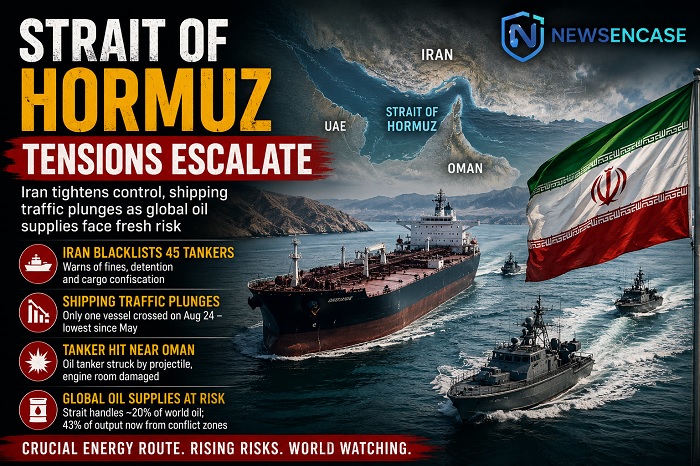
Tensions in the Strait of Hormuz have intensified sharply as Iran tightens its grip on one of the world’s most important energy corridors, threatening action against dozens of tankers while shipping traffic falls to extremely low levels.
In the latest escalation, Iran’s newly established Persian Gulf Strait Authority blacklisted 45 tankers, accusing them of violating its rules for crossing the waterway. Tehran warned that the vessels could face fines, detention and cargo confiscation. Ships conducting transfers with blacklisted tankers could also face penalties.
Shipping Traffic Falls Sharply
The impact on commercial shipping is becoming increasingly visible. Preliminary Kpler tracking data showed that only one commodity vessel crossed the Strait on Monday, August 24, the lowest daily figure since May 7. Six vessels had crossed on Sunday, although the figures could be revised because some ships have switched off tracking transponders while navigating the region.
The latest slowdown follows attacks on commercial vessels. Earlier in August, just five commodity vessels crossed the Strait on one Saturday and none were registered the following day, compared with 31 during the previous weekend.
Tanker Hit Near Oman
Security concerns increased further after an oil tanker reported being struck by an unidentified projectile approximately nine nautical miles northeast of Ash Shishah, Oman. The UK Maritime Trade Operations agency said the tanker suffered engine-room damage and was disabled, while its crew was reported safe.
US Sanctions Add to Iran Tensions
The maritime confrontation is unfolding alongside Washington’s expanded economic campaign against Tehran. The United States has announced sanctions targeting 60 Iran-linked individuals, entities and vessels and threatened further restrictions against countries and businesses maintaining certain economic relationships with Iran.
Iran has vowed retaliation, including potential measures affecting Gulf oil exports, increasing concerns that the Strait could become an even greater flashpoint.
Global Oil Supplies Remain at Risk
The stakes extend far beyond the Middle East. Before the current conflict, the Strait of Hormuz handled roughly 20% of global oil and liquefied natural gas shipping, making prolonged disruption a significant threat to international energy security.
The wider energy market is already under pressure. Around 43% of global oil production—roughly 45 million barrels per day based on 2025 output—now originates in conflict-affected regions, according to Reuters analysis.
Despite the geopolitical risks, crude prices declined on August 25 as traders assessed the immediate impact of the latest US sanctions. However, continued tanker attacks, Iranian enforcement measures or further military escalation around Hormuz could rapidly increase risks to oil supplies, shipping costs and global fuel prices.
About the Author