
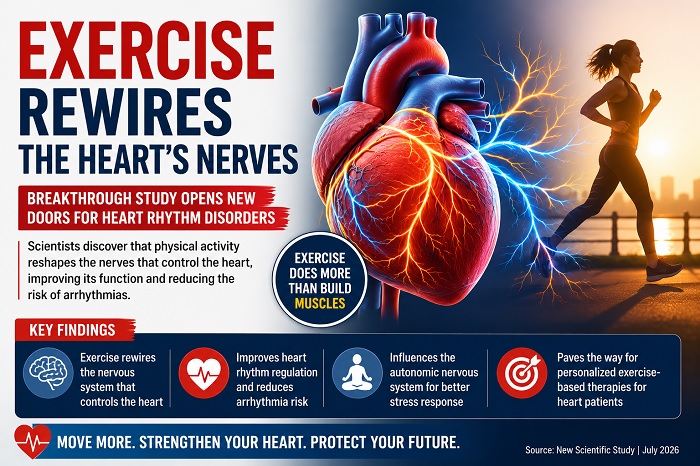
A new study reveals that exercise not only strengthens the heart but also rewires the nerves controlling it, opening new possibilities for personalized treatments for arrhythmias and other heart conditions.
New Delhi: A new scientific study has revealed that regular exercise does more than strengthen the heart—it also rewires the nerves that control it, a discovery that could pave the way for more personalized treatments for heart rhythm disorders such as arrhythmias.
Researchers found that physical activity triggers changes in the heart’s nervous system, improving the communication between the brain and the heart. These neural adaptations help regulate heart function more efficiently and may reduce the risk of abnormal heart rhythms.
The findings suggest that exercise influences the autonomic nervous system, which controls involuntary functions such as heart rate, blood pressure, and breathing. By reshaping these neural pathways, exercise enhances the heart’s ability to respond to physical and emotional stress while maintaining a healthier rhythm.
Scientists believe the discovery could lead to personalized exercise-based therapies for patients with cardiovascular diseases. Rather than relying solely on medication, future treatment plans may use tailored exercise programs to improve nerve function and reduce the likelihood of dangerous arrhythmias.
Heart disease remains one of the leading causes of death worldwide, and experts continue to emphasize the importance of regular physical activity for cardiovascular health. Along with strengthening the heart muscle, exercise is already known to improve circulation, lower blood pressure, reduce inflammation, and support overall metabolic health. The new findings add another important benefit by showing that exercise can directly remodel the heart’s neural control system.
Researchers say additional studies involving human participants will be needed to determine how these findings can be translated into clinical treatments. However, the results reinforce the growing body of evidence that consistent physical activity is one of the most effective ways to protect long-term heart health.
About the Author