
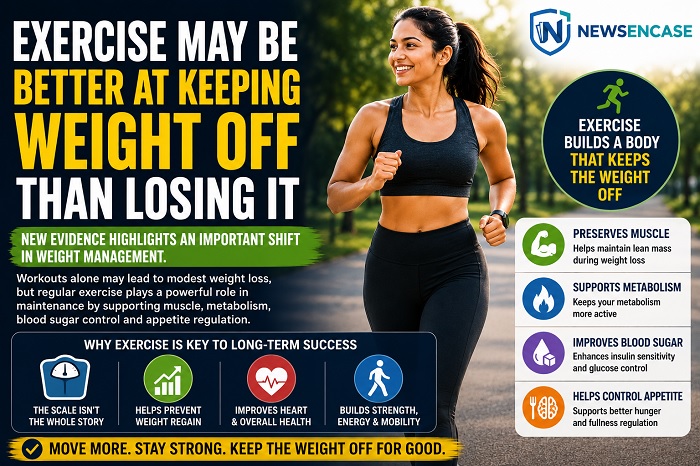
Regular exercise may be more powerful for maintaining weight loss than producing large amounts of weight loss on its own, according to emerging research that is reshaping how experts think about physical activity and long-term weight management.
While workouts can certainly contribute to fat loss, studies consistently show that exercise alone often produces more modest changes on the scale than many people expect. Its bigger advantage may emerge after weight has already been lost, when regular physical activity can help prevent regain while supporting muscle, metabolic health and appetite regulation.
Why Exercise Alone May Produce Modest Weight Loss
Weight loss ultimately requires the body to use more energy than it consumes. Exercise increases energy expenditure, but the body can partially compensate for those calories.
Some people become hungrier after increasing physical activity and unconsciously eat more. Others may reduce their movement during the rest of the day after completing a demanding workout.
These compensatory responses can help explain why exercise programmes sometimes produce less weight loss than calorie calculations would predict.
That does not mean exercise has failed. The scale captures only one part of what is happening inside the body.
Exercise Becomes Powerful During Weight Maintenance
Keeping lost weight from returning is one of the biggest challenges in obesity management.
After weight loss, the body can respond with physiological adaptations that favour weight regain, including changes in appetite and energy expenditure.
Regular exercise can help counter some of those pressures by increasing daily energy use and improving the body’s ability to regulate fuel.
Research has repeatedly associated higher levels of physical activity with greater long-term weight-loss maintenance, although the amount needed varies considerably between individuals.
Strength Training Helps Protect Muscle
Exercise becomes particularly valuable because weight management is about more than body weight.
During calorie restriction, people can lose both fat and lean tissue. Resistance training provides muscles with a reason to remain strong and can help preserve lean mass during weight loss.
Maintaining muscle supports strength, mobility, physical function and metabolic health, which is why resistance exercise is increasingly emphasized alongside weight-management treatments.
Exercise Can Improve Blood Sugar Without Huge Weight Loss
One of the most important lessons from exercise research is that health improvements can occur even when the scale barely moves.
Physical activity can improve insulin sensitivity and glucose regulation while enhancing cardiovascular fitness and reducing cardiometabolic risk.
Someone who loses only a small amount of weight through exercise may therefore still experience meaningful improvements in health.
Workouts May Also Influence Appetite
Exercise’s relationship with hunger is complex.
Some workouts can temporarily suppress appetite, while regular training may improve the body’s ability to regulate hunger and fullness signals over time. Responses differ significantly between individuals, however, and exercise should not be viewed as a guaranteed appetite suppressant.
Sleep, stress, diet, medications and individual biology also influence hunger and weight regulation.
Stop Judging Exercise Only by the Scale
The emerging evidence supports a broader way of measuring fitness progress.
Instead of asking only “How much weight did I lose?”, useful indicators can include waist circumference, strength, cardiovascular fitness, blood glucose, blood pressure, mobility and body composition.
This distinction is particularly relevant as GLP-1 medications and other obesity treatments enable some people to achieve substantially greater weight loss than exercise alone typically produces.
Exercise still plays a complementary role by helping people maintain muscle, improve fitness and support metabolic health during and after weight loss.
The practical message is straightforward: diet and medical treatments may create much of the initial weight loss for some people, but regular exercise can become one of the most valuable tools for building a healthier body and keeping lost weight from returning.
About the Author