
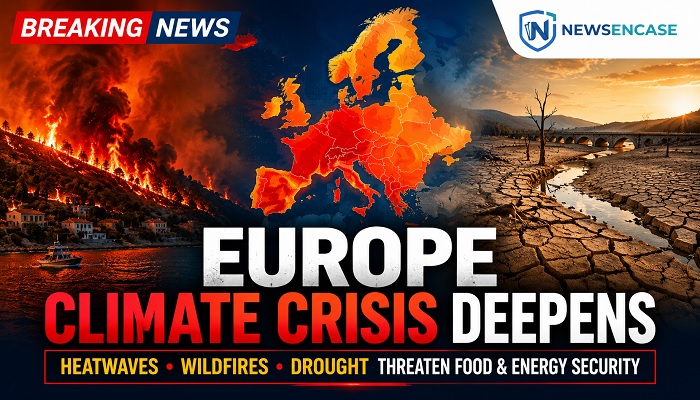
Europe is facing an escalating climate crisis as record-breaking heatwaves, devastating wildfires and prolonged drought strain agriculture, water resources and energy infrastructure across several countries.
Brussels: Europe is grappling with one of its most severe climate emergencies in recent years as prolonged heatwaves, widespread wildfires, and persistent drought conditions continue to disrupt daily life, agriculture, and critical infrastructure across the continent. Governments have intensified emergency response measures while scientists warn that the frequency and intensity of extreme weather events are increasing due to climate change.
Countries including Greece, France, Italy, Spain, Portugal, Romania, and Hungary have experienced record-high temperatures exceeding 40°C in several regions. Thousands of firefighters have been deployed to combat forest fires that have forced large-scale evacuations, destroyed homes, and damaged protected natural habitats.
The prolonged drought has significantly reduced water levels in major rivers, affecting irrigation systems, drinking water supplies, and hydroelectric power generation. In Hungary, authorities closely monitored cooling operations at the Paks Nuclear Power Plant as low Danube River water levels raised concerns over energy production.
Agricultural experts have warned that the ongoing weather conditions could reduce crop yields for wheat, corn, olives, grapes, and vegetables, potentially increasing food prices across Europe in the coming months. Farmers in several countries are already reporting substantial losses due to water shortages and heat stress on crops and livestock.
Climate scientists say the current crisis highlights the urgent need for stronger climate adaptation strategies, including improved water management, wildfire prevention, renewable energy investments, and resilient agricultural practices. The European Union is coordinating with member states to provide emergency assistance while reviewing long-term climate resilience policies.
Meteorological agencies have cautioned that high temperatures and dry conditions are likely to persist in parts of Southern and Central Europe over the coming weeks, keeping wildfire risks elevated. Authorities continue to urge residents and tourists to follow safety advisories, conserve water, and remain alert in regions vulnerable to extreme weather.
As Europe confronts another challenging summer, policymakers face mounting pressure to accelerate climate action while balancing economic stability, food security, and energy resilience.
About the Author