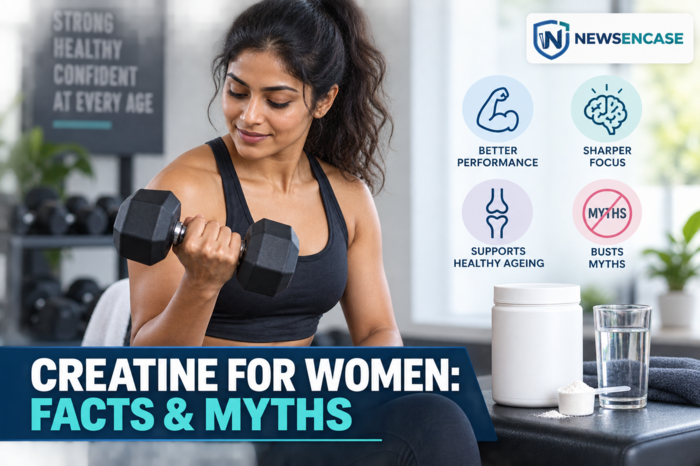
Creatine may support strength and exercise performance in women. Learn about dosing, water weight, safety and claims that remain unproven.
Creatine is often marketed to male bodybuilders, but growing interest among women has brought new attention to its potential role in strength, exercise performance and healthy ageing.
Creatine is a naturally occurring compound stored mainly in muscle, where it helps rapidly regenerate energy during short, intense efforts. Creatine monohydrate is the most extensively studied supplemental form.
When combined with resistance training, supplementation can improve strength and training capacity for many people. Research in women is less extensive than research in men, and results are not identical across studies, but reviews generally consider creatine safe for healthy adults when used appropriately.
One common myth is that creatine is a steroid. It is not. Another is that it automatically creates bulky muscles. Changes in muscle size depend on training, nutrition, genetics and time. Some users notice an early increase in body weight because creatine draws water into muscle cells; this is not the same as gaining body fat.
A typical evidence-based approach uses 3–5 grams of creatine monohydrate daily. A loading phase is optional rather than essential. Consistent daily intake matters more than taking it immediately before or after a workout.
Claims about brain function, bone health, menopause and depression are being investigated, but the evidence is not strong enough to present creatine as a treatment for these conditions. Marketing promises should be separated from established performance research.
Choose a plainly labelled product from a reputable manufacturer that uses independent quality testing. Multi-ingredient blends may contain stimulants or unnecessary additives.
People with kidney disease, pregnancy, breastfeeding or complex medical conditions should consult a qualified clinician before supplementation. Creatine should complement—not replace—regular meals, adequate protein, hydration, sleep and progressive strength training.
About the Author