
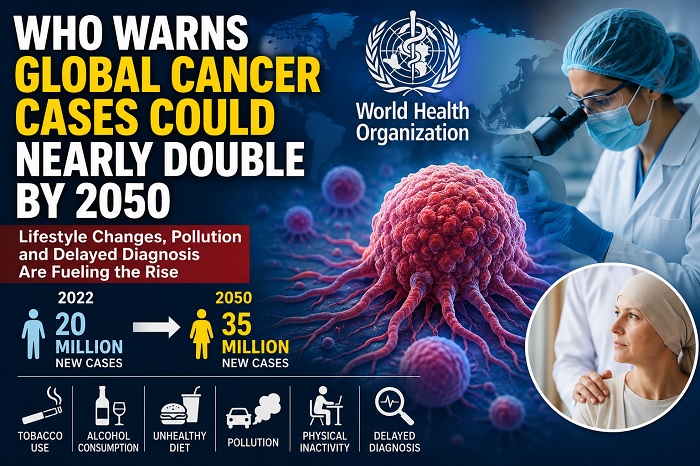
The World Health Organization warns that global cancer cases could nearly double by 2050 due to unhealthy lifestyles, pollution, aging populations, and delayed diagnosis. Learn the key risk factors and prevention measures.
Geneva: The World Health Organization (WHO) has warned that the global burden of cancer is expected to rise dramatically, with the number of new cancer cases projected to nearly double by 2050 if current trends continue.
According to health experts, the surge is being driven by a combination of population growth, aging demographics, unhealthy lifestyle habits, environmental pollution, and delayed diagnosis. The increase is expected to place enormous pressure on healthcare systems across both developed and developing nations.
WHO highlighted that lifestyle-related risk factors such as tobacco use, alcohol consumption, obesity, unhealthy diets, and physical inactivity continue to contribute significantly to cancer incidence worldwide. Exposure to air pollution and other environmental hazards is also increasing the risk of several types of cancer.
Health officials stressed that many cancers can be prevented or successfully treated when detected early. However, delayed screening, limited access to healthcare, and late diagnosis remain major challenges, particularly in low- and middle-income countries.
The organization urged governments to strengthen cancer prevention strategies by promoting healthier lifestyles, expanding vaccination programmes where applicable, improving access to early screening, and investing in quality treatment facilities.
Medical experts also encourage individuals to adopt healthier daily habits, undergo regular health check-ups, avoid tobacco, maintain a balanced diet, exercise regularly, and seek medical advice promptly if symptoms persist.
With cancer cases projected to rise sharply over the coming decades, WHO says coordinated global action is essential to reduce preventable deaths and improve survival rates.
About the Author


