
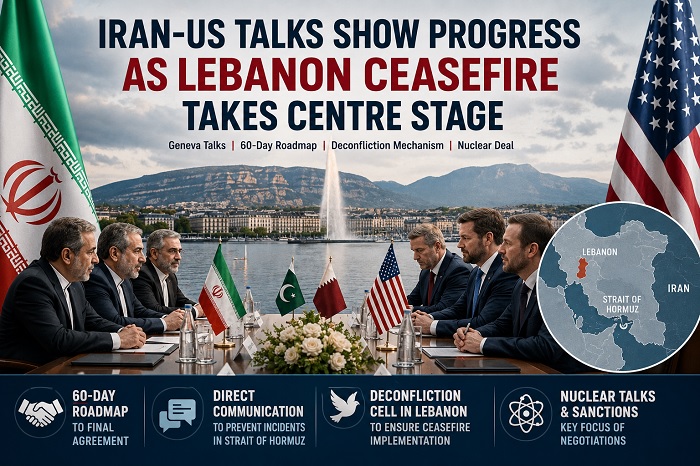
Geneva, June 22, 2026: The first day of high-level talks between Iran and the United States concluded with signs of progress despite a tense start triggered by sharp exchanges over the Strait of Hormuz and the ongoing conflict in Lebanon.
Mediators Pakistan and Qatar announced that both sides had agreed on a roadmap aimed at reaching a final agreement within 60 days. Technical-level discussions are expected to continue throughout the week as negotiators work to address key regional and nuclear issues.
Iranian Foreign Minister Abbas Araghchi described the discussions as productive, stating that mediation efforts by Pakistan and Qatar had generated significant progress toward ending hostilities in Lebanon. He identified the implementation of a new deconfliction mechanism in Lebanon as the first major test of the understandings reached during the talks.
According to a joint statement issued by the mediators, Washington and Tehran agreed to establish a direct communication channel to prevent incidents in the Strait of Hormuz. They also decided to create a deconfliction cell in coordination with the Lebanese government to help maintain the cessation of military operations in Lebanon.
The negotiations faced an early setback after US President Donald Trump warned Iran against any attempt to disrupt shipping through the Strait of Hormuz and demanded that Tehran restrain Hezbollah activities in Lebanon. Iranian state media reported that the delegation temporarily paused participation following Trump’s remarks, though discussions later resumed through indirect mediation channels.
The US delegation was led by Vice President JD Vance, accompanied by special envoy Steve Witkoff and senior adviser Jared Kushner. Iran was represented by Parliament Speaker Mohammad Bagher Ghalibaf and Foreign Minister Abbas Araghchi.
A key focus of the negotiations remains Iran’s nuclear programme. Under the existing memorandum of understanding, Iran is expected to address concerns regarding its stockpile of highly enriched uranium, while broader questions about future uranium enrichment rights remain unresolved.
Iranian officials also indicated that progress on nuclear discussions would depend on the implementation of economic provisions included in the agreement, including sanctions waivers for oil exports and the release of frozen Iranian assets abroad.
Despite ongoing tensions, diplomats from both sides expressed cautious optimism that the 60-day negotiation window could pave the way for a broader agreement covering regional security, economic cooperation and nuclear safeguards.
The talks come amid renewed efforts to maintain a fragile ceasefire in Lebanon, where clashes involving Hezbollah and Israeli forces continue to pose a significant challenge to long-term regional stability.
About the Author