New Study Highlights Communication Challenges in Hypertension and Diabetes Care
A new qualitative study has revealed that healthcare professionals face significant challenges when communicating health risks and lifestyle recommendations to patients with hypertension and diabetes, raising concerns about the effectiveness of preventive healthcare strategies.
The research, published in the medical journal Cureus, explored clinicians’ experiences and attitudes toward discussing lifestyle changes with patients managing chronic conditions such as high blood pressure and diabetes. The findings suggest that while doctors recognize the importance of preventive advice, several barriers often limit meaningful conversations about long-term health risks and behavioral change.
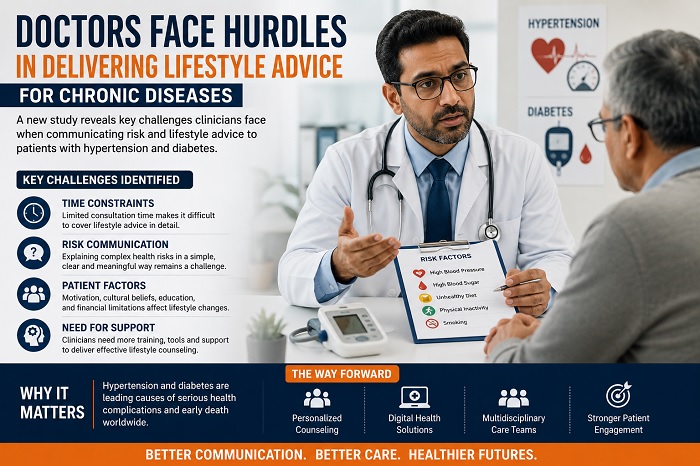
According to the study, time constraints during consultations remain one of the biggest obstacles. Many clinicians reported struggling to balance medical treatment discussions with comprehensive guidance on diet, exercise, weight management, smoking cessation, and other lifestyle factors.
Healthcare professionals also highlighted difficulties in communicating risk effectively. Explaining complex health risks in a way that patients can easily understand and act upon was identified as a persistent challenge. Some clinicians expressed concerns that patients may become overwhelmed, anxious, or disengaged when presented with detailed risk information.
The study found that patient motivation and socioeconomic factors often influence the success of lifestyle counseling. Clinicians noted that financial limitations, cultural beliefs, educational backgrounds, and access to healthcare resources can significantly affect a patient’s ability to adopt healthier habits.
Researchers emphasized that clinicians generally view lifestyle interventions as a crucial component of managing chronic diseases. However, many participants indicated a need for improved communication tools, additional training, and greater support systems to help patients make sustainable lifestyle changes.
The findings also underscore the growing global burden of non-communicable diseases. Hypertension and diabetes continue to be among the leading causes of cardiovascular complications, kidney disease, and premature mortality worldwide, making effective risk communication increasingly important.
Experts suggest that integrating personalized counseling strategies, digital health tools, and multidisciplinary care teams could help bridge communication gaps and improve patient outcomes.
The study concludes that strengthening clinician-patient communication and providing better resources for preventive care could play a key role in reducing the long-term impact of chronic diseases and improving public health outcomes.
About the Author