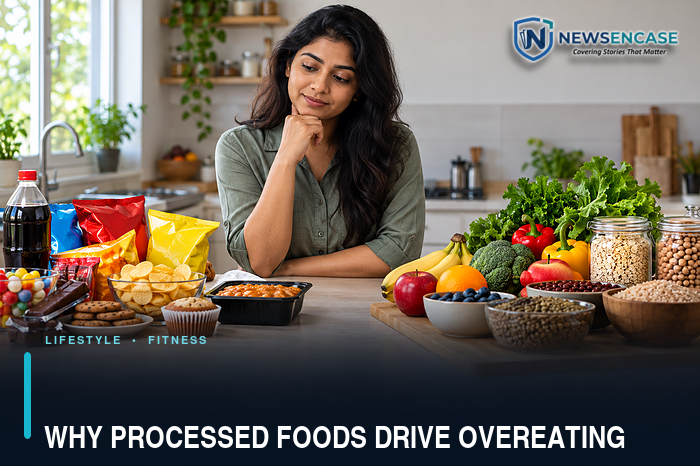
Ultra-processed foods may promote overeating through soft textures, rapid eating and weaker fullness signals—not just calories and sugar.
Ultra-processed foods are often criticised for containing excess sugar, salt and unhealthy fats. Researchers are increasingly studying another possibility: the physical structure of these foods may make them easier to eat quickly and harder for the body’s fullness signals to keep pace.
Ultra-processed products typically contain industrial formulations, flavours, colours, emulsifiers or modified starches that are uncommon in home kitchens. Examples can include some packaged snacks, sweetened drinks, instant meals, processed meats and desserts, although classification is sometimes debated.
Controlled feeding research has found that people offered an ultra-processed diet consumed substantially more energy than when they ate minimally processed meals, even when the presented diets were designed to have similar amounts of major nutrients. One proposed explanation is that softer textures and altered food structures require less chewing, allowing calories to be consumed faster.
Rapid digestion may also affect communication between the gut and brain. Intact grains, vegetables, beans and nuts retain natural structures that slow eating and nutrient absorption. Processing can break those structures down, potentially changing the release of hormones involved in fullness.
This does not mean every packaged food is harmful. Milk, frozen vegetables, plain curd, canned beans and whole-grain bread may be processed for safety or convenience while remaining nutritious. The degree and purpose of processing, ingredient quality and the overall diet all matter.
Shoppers can compare products by reading ingredient lists and nutrition labels. Foods with multiple additives, high sodium, added sugars and little fibre are better treated as occasional choices. Pairing convenience foods with vegetables, fruit or a protein source can improve meal quality.
Families do not need to eliminate favourite snacks overnight. A realistic strategy is to replace one heavily processed item at a time: water instead of a sugary drink, fruit and nuts instead of sweets, or a simple home-cooked breakfast instead of a packaged dessert-style cereal.
Research continues to refine the definition of ultra-processed food and determine which features cause the greatest risk. For now, eating mostly varied, minimally processed foods remains a sensible approach.
About the Author