
NEW DELHI: Political speculation over another sitting of Parliament has intensified after Parliamentary Affairs Minister Kiren Rijiju left open the possibility of the House being reconvened, bringing the contentious delimitation proposal and implementation of women’s reservation back into national focus.
Rijiju has not announced an immediate special session. However, he pointed out that Parliament can be reconvened when a session has been adjourned sine die but not yet formally prorogued, citing precedents for such a move.
Why Parliament Could Meet Again
The Monsoon Session has ended its scheduled sittings, but the delay in formally proroguing it has fuelled speculation that the government could call MPs back without beginning an entirely new session.
Asked about another sitting, Rijiju said the decision ultimately rests with the government, which requests the President to summon Parliament. He stopped short of confirming that such a decision had been taken.
The minister also stressed Prime Minister Narendra Modi’s commitment to implementing women’s reservation quickly, adding to expectations that the government could again pursue legislation linking the quota with delimitation.
Kharge Demands All-Party Meeting
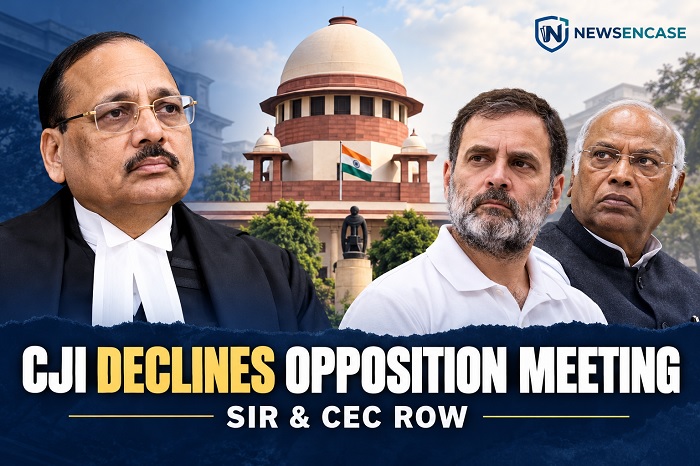
Congress president and Rajya Sabha Leader of Opposition Mallikarjun Kharge responded by writing to Prime Minister Modi on August 27.
Kharge asked the government to convene an all-party meeting before proceeding with delimitation, arguing that political parties and state governments should receive adequate time to examine any proposal before legislation is introduced.
His intervention follows an earlier request made in July for consultations on the politically sensitive issue.
Congress MP Shashi Tharoor has also backed broader consultations, arguing that state governments are major stakeholders in any redistribution of parliamentary representation.
Congress Wants Lok Sabha Strength Frozen at 543
Kharge has also outlined the Congress position on the issue.
The party wants the existing Lok Sabha strength of 543 seats and the current state-wise allocation to continue for another 25 years, while supporting implementation of one-third reservation for women beginning with the 2029 Lok Sabha elections.
This is important because the broader delimitation debate is not simply about redrawing constituency boundaries. It could also determine how parliamentary representation is distributed among India’s states.
That has generated particular concern over whether states that successfully reduced population growth could see their relative political representation decline compared with faster-growing states.
Women’s Reservation Linked to Delimitation
The debate is closely connected to implementation of the women’s reservation framework.
The government has been seeking support for constitutional changes intended to operationalise 33% reservation for women in the Lok Sabha and state legislatures, alongside a new delimitation exercise.
An earlier attempt during the Budget Session failed to secure the constitutionally required two-thirds majority in the Lok Sabha. According to reporting at the time, 298 MPs supported the measure while 230 opposed it, short of the 352 votes required among the 528 members participating.
That parliamentary arithmetic means cooperation from opposition parties would be crucial if the government brings back a constitutional amendment.
Government Has Been Consulting Opposition
Rijiju has already held discussions with Lok Sabha Leader of Opposition Rahul Gandhi over the delimitation and women’s reservation proposals.
Congress maintained its position that the government should first convene an all-party meeting before moving ahead.
Earlier this month, Rijiju had specifically ruled out reports of an August 16–18 special session, saying no such proposal was under consideration at that stage.
His latest comments therefore represent an opening of the door to another sitting rather than confirmation that one has been scheduled.
Delimitation Could Become Major Political Flashpoint
Any fresh attempt to redraw parliamentary constituencies is likely to trigger an intense national debate.
Population-based redistribution has long generated concerns among southern states and other regions that fear losing relative influence in Parliament despite having achieved stronger population-control outcomes.
Supporters of a new delimitation exercise, meanwhile, argue that representation should reflect demographic changes and that parliamentary constituencies need to be updated after decades of population growth.
The issue has now become further intertwined with women’s political representation, increasing both its constitutional significance and political sensitivity.
For now, no date for another Parliament sitting has been announced. But with the Monsoon Session yet to be formally prorogued, Rijiju’s remarks and Kharge’s subsequent letter have ensured that delimitation and women’s reservation will remain at the centre of India’s political debate in the coming days.
About the Author