
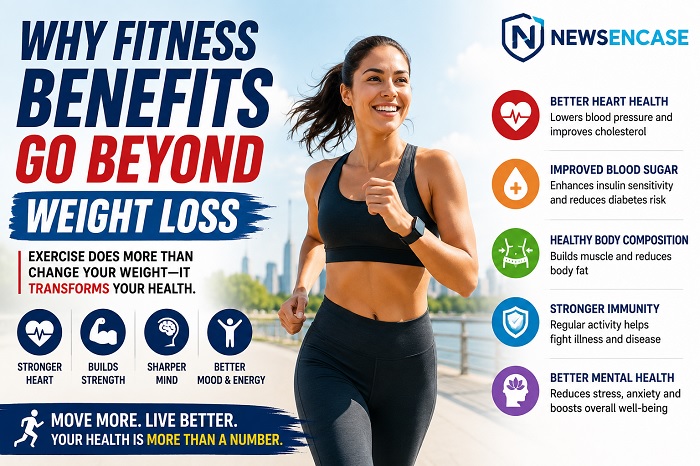
Regular exercise can deliver major health benefits even when the number on the weighing scale barely changes, according to updated scientific guidance that is shifting the focus of fitness away from weight loss alone.
A 2026 American Heart Association (AHA) scientific statement emphasizes that physical activity should be a central part of obesity care because it can improve cardiovascular and metabolic health independently of substantial weight loss.
Exercise Benefits Go Beyond the Scale
For people with overweight or obesity, regular physical activity can improve several important health markers, including blood pressure, insulin sensitivity, cholesterol levels and cardiorespiratory fitness, even when exercise produces little or no change in body weight.
This matters because body weight alone does not reveal everything happening inside the body. Someone whose weight remains relatively stable may still be developing better cardiovascular fitness, stronger muscles and improved metabolic health.
The AHA’s message is therefore straightforward: exercise should not be considered unsuccessful simply because it fails to produce dramatic weight loss.
Fitness Progress Isn’t Just About Kilograms
Recent expert commentary also highlights other signs that healthier habits are working. Improvements in strength, stamina, body composition, blood sugar, blood pressure and energy levels can represent meaningful progress even when scale weight changes slowly.
Research has similarly identified benefits of physical activity beyond weight reduction across metabolic, cardiovascular and brain-health outcomes in people living with obesity.
Cardio and Strength Training Both Matter
The latest evidence supports combining different forms of physical activity rather than relying exclusively on workouts designed to burn calories.
The AHA recommends adults work toward at least 150 minutes of moderate-intensity aerobic activity or 75 minutes of vigorous activity per week, while adding moderate-to-high-intensity muscle-strengthening exercise on at least two days. It also encourages people to sit less and move more throughout the day.
A recently reported long-term study involving roughly 8,000 adults also found that participants meeting both aerobic and muscle-strengthening recommendations had substantially lower risk of developing type 2 diabetes, reinforcing the value of combining cardio and resistance exercise.
A New Way to Measure Fitness Success
The emerging approach changes the question from “How much weight did I lose?” to “How much healthier and fitter am I becoming?”
Weight management can remain an important goal for some people, but exercise has benefits of its own. Better cardiovascular fitness, improved metabolic markers, greater strength and easier everyday movement can all represent valuable outcomes—even when the scale refuses to move.
As the AHA summarizes the message: physical activity deserves to be prioritized for its cardiovascular and metabolic benefits, not simply for its ability to burn calories or reduce body weight.
About the Author


