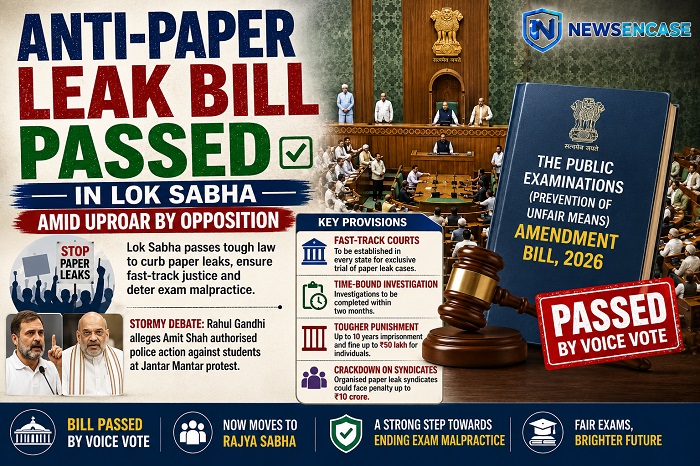
The Lok Sabha passed the Public Examinations (Prevention of Unfair Means) Amendment Bill, 2026, introducing stricter penalties for paper leaks, fast-track courts, and time-bound investigations amid heated Opposition protests.
New Delhi: The Lok Sabha on Wednesday passed the Public Examinations (Prevention of Unfair Means) Amendment Bill, 2026 by voice vote after a heated debate marked by repeated disruptions from the Opposition over allegations of police action against students protesting at Delhi’s Jantar Mantar.
The Bill, aimed at strengthening the fight against examination paper leaks, now moves to the Rajya Sabha for consideration before it can become law.
Key Provisions of the Anti-Paper Leak Bill
The proposed legislation introduces stringent measures to curb examination-related fraud and ensure swift justice for offenders. Key highlights include:
- Fast-track courts to be established in every state for exclusive trial of paper leak cases.
- Investigations to be completed within two months to ensure speedy disposal of cases.
- Up to 10 years of imprisonment and a fine of up to ₹50 lakh for individuals found guilty of leaking examination papers.
- Organised paper leak syndicates could face penalties of up to ₹10 crore, making it one of the toughest anti-cheating laws in the country.
The government said the legislation is designed to protect the integrity of public examinations and restore confidence among students after several high-profile paper leak incidents triggered nationwide protests.
Stormy Debate in the House
The debate witnessed sharp exchanges between the treasury benches and the Opposition.
Leader of Opposition Rahul Gandhi alleged that Union Home Minister Amit Shah had authorised police action against students during the Cockroach Janta Party (CJP) protest at Delhi’s Jantar Mantar. The allegations led to repeated disruptions and protests inside the House, while the government rejected the claims.
Despite the uproar, the Bill was passed by voice vote, marking a significant legislative step toward tackling examination malpractice.
If cleared by the Rajya Sabha and receiving Presidential assent, the law is expected to strengthen India’s legal framework against paper leaks and examination fraud.
About the Author