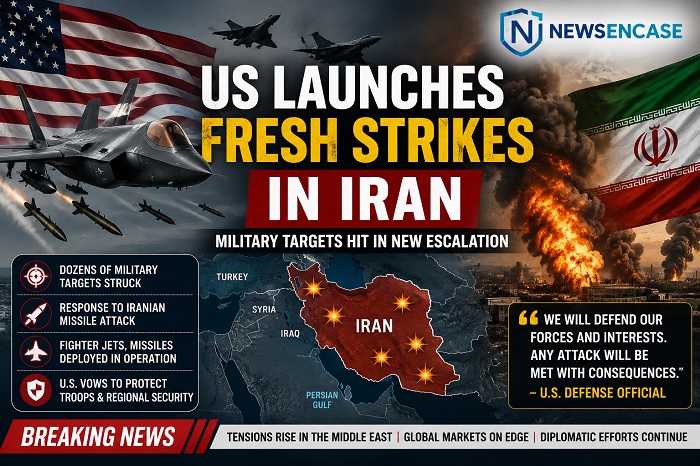
The United States has launched a fresh wave of airstrikes targeting military sites in Iran after an alleged Iranian missile attack on US forces in the Middle East. The latest escalation has raised concerns over regional stability and global energy markets.
Washington, D.C.: The United States has launched a new wave of airstrikes against Iran, targeting multiple military installations in what officials described as a response to an earlier Iranian missile attack on American forces in the Middle East. The latest military action marks a significant escalation in the ongoing US-Iran conflict.
Dozens of Military Targets Hit
According to the US Central Command (CENTCOM), the strikes lasted for nearly two hours and targeted dozens of locations, including:
- Military command and control centres
- Missile and drone infrastructure
- Coastal surveillance facilities
- Maritime assets linked to Iran’s Islamic Revolutionary Guard Corps (IRGC)
US officials said the operation was aimed at degrading Iran’s military capabilities and preventing further attacks on American personnel and regional security.
Escalation Follows Iranian Missile Attack
The latest strikes came after Washington accused Iran of launching a missile attack against US forces stationed in the region. US officials said the retaliation was intended to demonstrate that attacks on American troops would draw a strong military response.
Regional Tensions Continue to Rise
The renewed military action has intensified concerns over the broader security situation in the Middle East. Analysts warn that continued exchanges between the two countries could further disrupt regional stability, affect commercial shipping routes, and increase volatility in global oil markets. Diplomatic efforts to reduce tensions remain stalled as both sides continue to exchange military and political warnings.
What Happens Next?
The situation remains fluid, with international leaders closely monitoring developments. Further military action or diplomatic initiatives could shape the next phase of the conflict, while investors continue to watch for potential impacts on energy prices and global markets.
About the Author