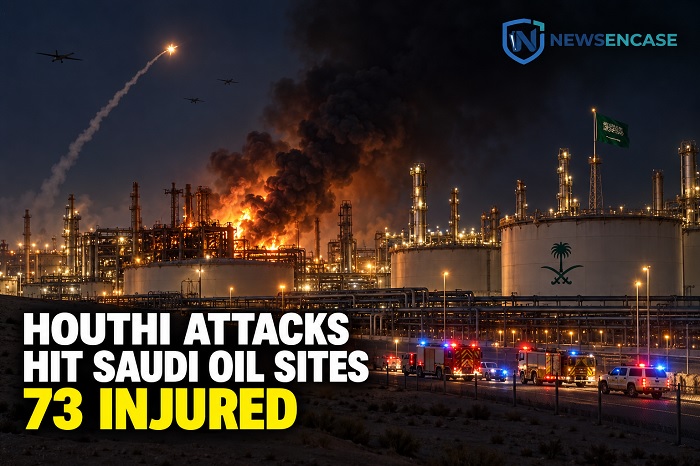

The US continued airstrikes on Iran for a ninth straight night as Yemen’s Houthi rebels announced a naval blockade targeting Saudi Arabia, raising fears of a wider Middle East conflict and global energy disruptions.
The Middle East conflict has entered a more dangerous phase as the United States continued airstrikes on Iranian military targets for a ninth consecutive night, following the deaths of additional American service members in recent attacks. The sustained military campaign has intensified fears of a wider regional war.
According to US military officials, the latest strikes targeted Iranian air defence systems, surveillance facilities, and Islamic Revolutionary Guard Corps (IRGC) positions. Washington says the operations are aimed at reducing Iran’s military capabilities and protecting American personnel and commercial shipping in the region.
In a significant escalation, Yemen’s Iran-backed Houthi movement announced a naval blockade targeting Saudi Arabia, warning that vessels linked to the country could face attacks. The declaration has heightened concerns over maritime security in the Red Sea and surrounding waters.
Security analysts warn that the Houthi move could further disrupt global shipping routes and energy markets, especially as tensions remain high around the Strait of Hormuz, one of the world’s busiest oil transit corridors.
The latest developments come amid the collapse of previous ceasefire efforts between Washington and Tehran. Diplomatic negotiations remain stalled, while both sides continue to exchange military strikes and accusations.
Global leaders have renewed calls for restraint, warning that continued escalation could destabilize the wider Middle East, disrupt international trade, and push global oil prices higher.
With military operations expanding across multiple fronts and regional armed groups becoming increasingly involved, the conflict now poses one of the most serious geopolitical challenges in recent years.
About the Author