
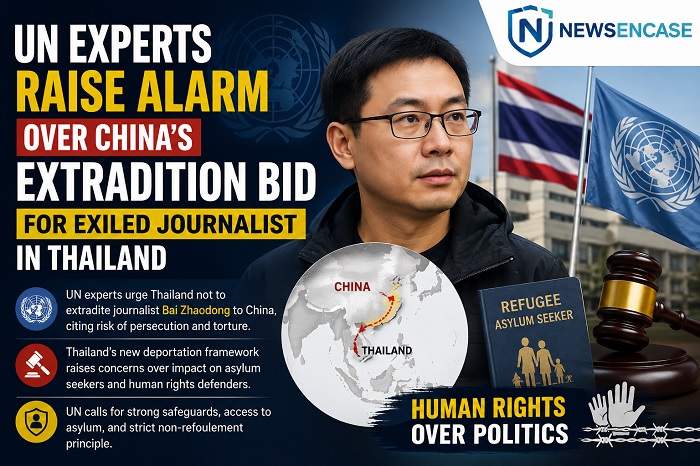
UN human rights experts have urged Thailand not to extradite Chinese journalist and asylum seeker Bai Zhaodong to China, warning he could face persecution, torture, and other serious human rights violations.
Geneva: United Nations human rights experts have called on Thailand to halt the extradition of Chinese journalist and human rights defender Bai Zhaodong, warning that his return to China could expose him to persecution, torture, or other serious human rights abuses.
In a statement issued on Friday, the UN experts urged Thai authorities to uphold the international principle of non-refoulement, which prohibits countries from returning individuals to places where they face a genuine risk of persecution, torture, or irreparable harm.
According to the UN, Bai fled China in 2023 after allegedly facing persecution linked to his journalism and human rights advocacy. He has since been recognized as an asylum seeker but has remained in immigration detention in Thailand since January 21, 2026, despite completing a two-month prison sentence for immigration-related offences earlier this year.
The experts noted that Bai’s planned resettlement to a safe third country was reportedly blocked on two occasions. They also expressed concern over China’s formal request for his extradition, warning that deporting him could violate international human rights obligations.
“Immigration status alone cannot justify prolonged deprivation of liberty,” the UN experts said, emphasizing that human rights defenders seeking international protection must not be returned to countries where they risk persecution or torture.
The UN also raised concerns over Thailand’s newly approved draft regulations introducing a unified and expedited deportation process for foreign nationals. Approved by the Thai Cabinet on July 14, 2026, the proposed framework aims to streamline deportation procedures.
While recognizing every country’s right to regulate migration, the UN stressed that any deportation process must include strong human rights safeguards, including access to asylum procedures, individual risk assessments, effective judicial review, and strict adherence to the principle of non-refoulement.
Human rights experts warned that without these protections, asylum seekers, refugees, journalists, and human rights defenders could face an increased risk of being forcibly returned to countries where they may suffer persecution.
The case has drawn international attention as rights organizations continue to call for greater protection of journalists and political asylum seekers facing transnational repression.
About the Author