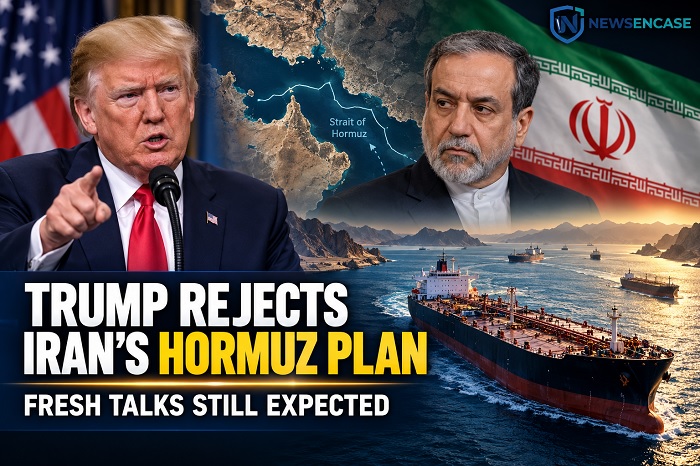
Donald Trump has rejected Iran’s seven-day plan to reopen the Strait of Hormuz but says US negotiators could hold fresh talks with Tehran this week.
US President Donald Trump has rejected Iran’s latest proposal to end regional hostilities and reopen the Strait of Hormuz, arguing that Tehran demanded major concessions before offering firm commitments on its nuclear programme.
Despite dismissing the seven-day roadmap, Trump said he expects American negotiators to hold further talks with Iranian representatives this week, leaving the diplomatic channel open.
What Iran Proposed
Iran presented the plan through Qatari mediators during the United Nations General Assembly in New York. Under the proposal, Washington would lift its naval blockade of Iranian ports, ease restrictions on Iranian oil exports, release frozen Iranian assets and support a regional ceasefire.
Iran would then reopen the Strait of Hormuz and begin wider negotiations with the United States, potentially including discussions about its nuclear programme.
Iranian Foreign Minister Abbas Araqchi said the agreement would start a seven-day process leading to the restoration of shipping through the strategically important waterway.
Why Trump Rejected the Deal
Trump said Iran was asking for terms that Washington could not accept. US Ambassador to the United Nations Mike Waltz said the administration opposed providing sanctions relief and releasing frozen assets before Iran made enforceable nuclear commitments.
Waltz also said Trump was not convinced that Tehran would negotiate in good faith after receiving the requested concessions.
The United States wants nuclear restrictions to form a central part of any agreement, while Iran has sought to address the Strait of Hormuz, sanctions and the American blockade before entering detailed nuclear talks.
Trump claimed Iran was pushing for an agreement because it was under intense military and economic pressure. However, he subsequently told Axios that he expected US negotiators to participate in another round of discussions during the coming week.
Iran Says Diplomacy Remains the Only Solution
Araqchi said Tehran had not yet received an official rejection through the mediators and was waiting for Washington’s definitive response.
“Our conditions are clear,” the foreign minister said, adding that reopening the strait depended on those conditions being fulfilled. Iran continues to maintain that negotiations are the only viable route out of the conflict.
Iranian President Masoud Pezeshkian has also said that his government is prepared to discuss its nuclear programme and other disputed issues but will not accept coercion.
Why the Strait of Hormuz Matters
The Strait of Hormuz connects the Persian Gulf with the Gulf of Oman and is one of the world’s most important energy corridors. Disruption to shipping through the narrow passage has affected oil exports, freight costs and global energy markets.
The United States has imposed a blockade on Iranian ports as part of its pressure campaign, while attacks and restrictions around the strait have sharply reduced commercial shipping.
The conflict began with US and Israeli strikes against Iran on February 28, 2026. Since then, fighting has alternated with temporary pauses and unsuccessful diplomatic efforts, while attacks involving Iran and its regional allies have widened instability across the Middle East.
The planned talks could provide another opportunity to narrow the differences, but the dispute over sanctions relief, frozen assets and nuclear guarantees remains the central obstacle to an agreement.
About the Author