
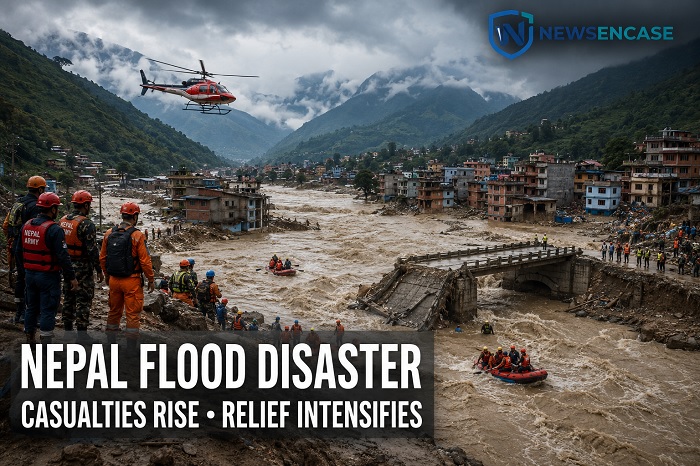
Kathmandu, August 29, 2026: The death toll from Nepal’s devastating Bhotekoshi flash flood has reached 616, with search teams continuing to look for hundreds of missing residents, workers, security personnel and foreign travellers. The disaster has caused widespread destruction across northern and central Nepal, damaging settlements, roads, bridges, hydropower facilities and communication networks.
According to the latest police figures available at 6 am on Saturday, 233 bodies had been recovered in Chitwan, 158 in Nawalparasi East, 48 in Gorkha, 47 in Nawalparasi West, 45 in Dhading, 41 in Nuwakot, 31 in Tanahun and 13 in Rasuwa. Officials have warned that the casualty count could rise as teams reach previously inaccessible areas and recover more victims from downstream locations.
How Many People Are Missing?
The number of missing people remains difficult to confirm because communication systems have been disrupted and authorities are still reconciling lists of residents, hydropower workers, tourists and pilgrims.
A Friday-evening assessment listed 1,924 people missing in Nepal and another 558 unaccounted for in Tibet, taking the combined Nepal–Tibet figure to 2,482. The missing included around 320 Indian nationals. These figures remain fluid and may change as stranded travellers make contact or rescue teams reach isolated communities.
Many foreign nationals were travelling through the region on their way to or from the Kailash Mansarovar pilgrimage when the flood struck.
What Caused the Nepal Flood?
The disaster began on August 26 when a massive collapse of glacier ice, rock and debris high in the Himalayas sent a powerful surge into the Bhotekoshi and Trishuli river systems. The fast-moving flow carried mud, boulders and broken infrastructure through mountain valleys, destroying communities within minutes.
The surge continued downstream through the Trishuli and Narayani river systems, carrying victims and debris across several districts. Scientists and disaster officials are continuing to study whether a temporary blockage created by the ice-and-rock avalanche caused water to accumulate before suddenly breaking through.
Authorities are also monitoring newly formed barrier lakes upstream. Although the water level in one lake reportedly declined, unstable ice, debris and the possibility of another breach continue to pose risks to rescuers and downstream communities.
Rescue and Medical Operations Continue
Thousands of personnel from the Nepali Army, Nepal Police, Armed Police Force and local disaster agencies have been deployed across affected districts. Helicopters, drones, boats and ground teams are being used to evacuate stranded residents, transport injured survivors and search riverbanks.
Radio Nepal reported that the Nepali Army had rescued 2,101 people through land and air operations since August 26 and provided medical assistance to 1,706 people through emergency centres in Trishuli and Dhunche. The Army said 900 people, including 56 foreign nationals, were brought to safety from Timure, Syafrubesi and Mailung during operations conducted from Friday morning to the afternoon.
Rescue teams have also been working inside mud-filled hydropower tunnels. Hundreds of workers and residents have been brought out alive, while specialised teams continue searching difficult sections where other people may remain trapped.
Washed-out bridges and damaged roads have forced authorities to rely heavily on helicopters. Students, teachers, patients and residents have been airlifted from communities cut off by the flood, while efforts are underway to clear landslides and reopen supply routes.
Relief Supplies Reach Affected Families
Humanitarian agencies estimate that at least 93,000 people need urgent assistance. Six health facilities have reportedly been damaged, while overcrowded shelters, contaminated water and disrupted sanitation services have raised concerns about infectious diseases.
UNICEF says more than 17,000 children need humanitarian support. The agency is distributing hygiene kits and preparing medical tents, mosquito nets, newborn supplies and therapeutic food. Teams are also providing psychosocial support, registering separated children and helping reunite them with their families. UNICEF has appealed for $17.2 million for emergency response and early recovery.
Local volunteers and organisations are sending drinking water, ready-to-eat meals, mattresses, clothes, tarpaulins and sanitation supplies to temporary shelters. However, damaged transport links continue to delay deliveries to remote mountain communities.
India Sends Medical and Tunnel-Rescue Assistance
India has expanded its humanitarian support by sending a third consignment containing around 10 tonnes of relief supplies. An 11-member specialised team consisting of medical personnel and tunnel-rescue experts has also reached Nepal to assist with complex operations.
Nepal has indicated that its domestic security agencies will continue leading general search-and-rescue work while the country accepts specialised foreign assistance in areas such as tunnel rescue, DNA testing, body preservation, temporary bridges and technical disaster assessment.
The Nepalese government expects the recovery to be long and expensive. A preliminary assessment by the country’s finance minister placed reconstruction requirements at approximately $4 billion to $5 billion, although the final estimate will depend on a complete damage survey.
With rescue operations continuing and several locations still inaccessible, authorities have asked residents near rivers and unstable slopes to remain alert and follow evacuation instructions. The immediate priorities remain finding missing people, providing medical treatment, restoring transport links and delivering food, clean water and shelter to affected families.
About the Author