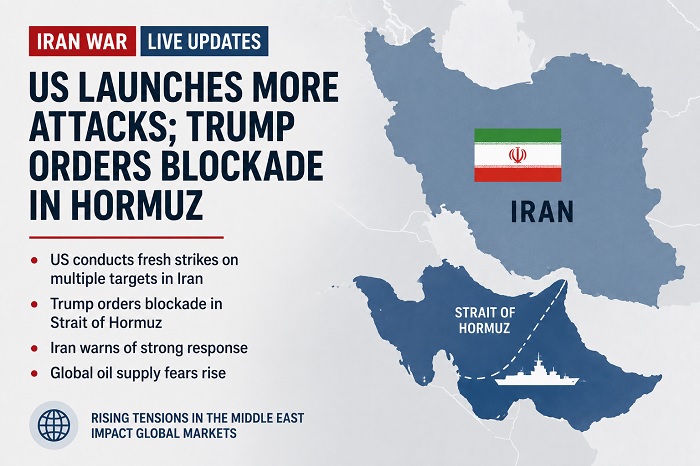
The Middle East conflict has intensified after the US launched new strikes on Iran and ordered a naval blockade in the Strait of Hormuz, raising concerns over regional security and global oil supplies.
Tehran/Washington: Tensions in the Middle East have intensified after the United States launched fresh military strikes on multiple targets in Iran, while President Donald Trump ordered a naval blockade in the Strait of Hormuz, according to ongoing international media reports.
The latest escalation has heightened fears of a wider regional conflict, with the Strait of Hormuz—one of the world’s most critical oil shipping routes—emerging as the focal point of the crisis. Any prolonged disruption in the waterway could significantly impact global energy supplies and international trade.
Iranian authorities have strongly condemned the renewed attacks, calling them a violation of international law. Officials in Tehran have warned that the country reserves the right to respond to actions that threaten its sovereignty and national security.
The United States has maintained that its military operations are aimed at protecting its strategic interests and ensuring maritime security in the Gulf region. Washington has also urged commercial vessels to remain vigilant as naval forces increase their presence around the Strait of Hormuz.
The rapidly evolving situation has prompted calls for restraint from several countries and international organizations. Diplomatic efforts are reportedly underway to prevent further escalation and encourage dialogue between the parties involved.
Global financial markets are closely monitoring the developments, with analysts warning that continued instability in the Gulf could trigger higher crude oil prices, disrupt shipping routes, and increase geopolitical uncertainty.
Security experts believe the coming days will be crucial in determining whether diplomatic initiatives can ease tensions or if the conflict risks expanding further across the region.
About the Author