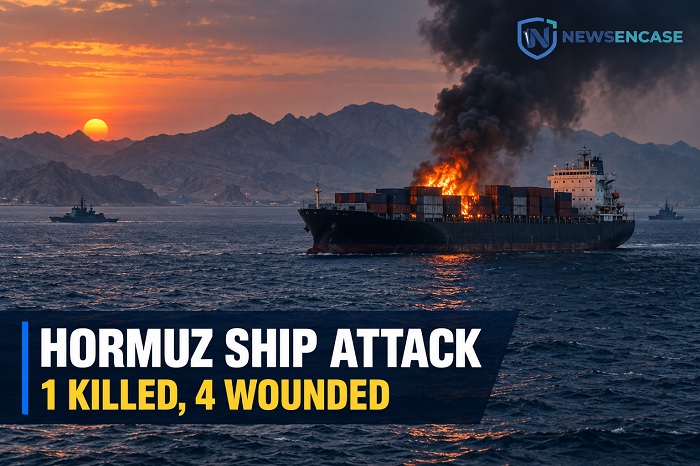
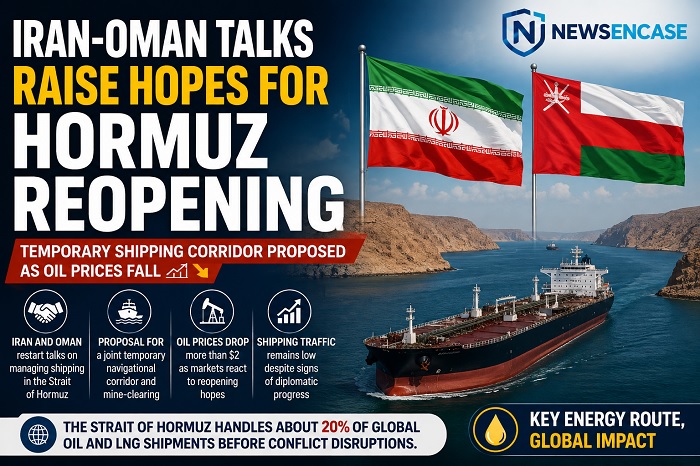
Iran and Oman have restarted negotiations over shipping through the Strait of Hormuz, raising hopes that a temporary maritime corridor could ease months of disruption along one of the world’s most important energy routes. The development immediately influenced global markets, with oil prices falling by more than $2 a barrel on Wednesday, August 26.
Temporary Hormuz Corridor Proposed
Iranian Foreign Minister Abbas Araghchi and Omani Foreign Minister Badr Albusaidi met in Tehran to discuss an interim framework for managing vessel traffic.
The two countries said their discussions included establishing a joint temporary navigational corridor and conducting mine-clearing operations. Technical negotiations are expected to continue toward a permanent maritime route and longer-term arrangements for managing traffic through the strait.
However, the discussions do not yet amount to a full reopening of the Strait of Hormuz. Shipping remains severely restricted, and significant political and security obstacles remain before normal traffic can resume.
Shipping Traffic Remains Extremely Low
Despite optimism surrounding the negotiations, actual vessel movements remain far below normal.
Preliminary Kpler data cited by Reuters showed that only five commodity vessels crossed the Strait of Hormuz on Tuesday, compared with a 10-day average of 15. Four vessels were recorded making the transit on Monday.
Before the conflict erupted in February, the Strait of Hormuz handled approximately one-fifth of global oil and liquefied natural gas shipments, making disruption there a major concern for energy markets worldwide.
Oil Prices Drop on Reopening Hopes
Markets reacted quickly to signs of diplomatic progress. Brent and US crude futures fell by more than $2 per barrel as traders considered the possibility that increased tanker traffic could eventually restore some disrupted Gulf supplies.
The decline highlights how closely global energy prices remain tied to developments in the narrow waterway.
US-Iran Dispute Remains Major Obstacle
A lasting solution remains complicated by continuing tensions between Washington and Tehran. The United States has intensified economic pressure on Iran, while negotiations over the wider conflict remain unresolved.
Energy analysts have also cautioned that an Iran-Oman maritime agreement alone may not be enough to restore normal oil flows while US restrictions on Iranian shipping and ports remain in place.
For now, the latest Iran-Oman negotiations represent a potentially important diplomatic opening rather than a confirmed reopening. If the temporary corridor becomes operational and security conditions improve, it could provide relief for shipping companies and energy markets—but normal navigation through the Strait of Hormuz has not yet been restored.
About the Author