
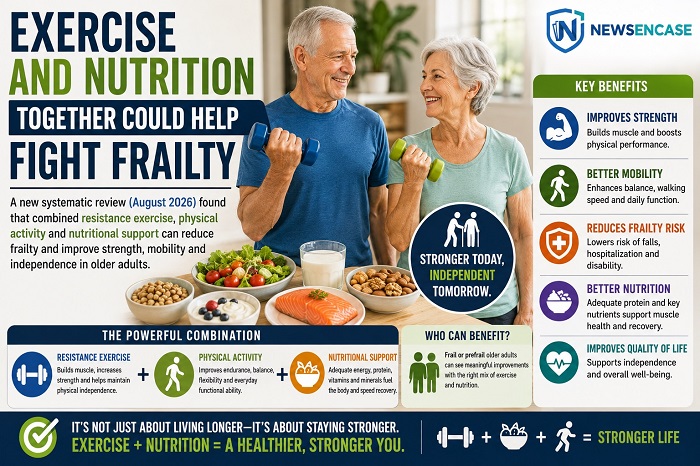
Combining resistance exercise, regular physical activity and nutritional support could be one of the most effective approaches for helping older adults fight frailty and maintain independence, according to a new systematic review and meta-analysis.
The research, published in Frontiers in Nutrition in August 2026, examined multidomain interventions designed for frail and prefrail older adults. The findings add to growing evidence that healthy aging may depend not on exercise or diet alone, but on addressing muscle strength, physical activity and nutrition together.
Exercise and Nutrition Target Frailty From Different Angles
Frailty is a condition involving declining physiological reserves that can leave older adults more vulnerable to falls, disability, hospitalization and loss of independence.
Muscle weakness and reduced physical performance are major components of frailty, while inadequate energy and protein intake can make maintaining muscle increasingly difficult.
That creates a strong rationale for combining nutrition with physical activity: exercise stimulates muscles, while adequate nutrition provides the resources needed to maintain and repair them.
Resistance Training Plays a Key Role
Among different types of exercise, progressive resistance training is particularly relevant to frailty because it directly challenges muscles.
Exercises can include weights, resistance bands, machines or appropriately designed bodyweight movements. Programmes may also incorporate walking, balance exercises and functional movements such as repeated chair rises.
The August review found that multidomain approaches incorporating exercise and nutrition showed benefits across important frailty-related outcomes, although the size of the effect varied among studies.
Nutrition Is More Than Simply Eating More Protein
Protein receives considerable attention in healthy-aging discussions because it supplies amino acids needed to maintain muscle tissue.
But preventing malnutrition involves more than protein alone.
Older adults also need sufficient overall energy, vitamins, minerals and a balanced dietary pattern. Depending on nutritional status, interventions examined in frailty research can include dietary counselling, protein-rich foods or oral nutritional supplements.
Individual needs vary, particularly for people with medical conditions, so nutritional interventions should ideally be tailored rather than based on a universal high-protein target.
Strength Can Matter More Than Body Weight
The findings also reinforce an important shift in healthy-aging research: body weight alone is a poor measure of physical resilience.
An older adult can maintain a similar weight while gradually losing muscle and strength. Researchers therefore frequently assess measures such as grip strength, walking speed, balance, mobility and ability to perform everyday tasks.
Preserving these abilities can determine whether someone remains physically independent.
Even Prefrailty Is an Important Window
One of the most significant implications involves people who are prefrail—those beginning to show signs of physical decline but who have not progressed to more severe frailty.
Intervening during this stage may provide an opportunity to slow or potentially reverse aspects of functional decline before they become harder to address.
That makes maintaining physical activity and adequate nutrition particularly important as people age.
Healthy Aging Requires More Than One Strategy
The review does not establish one perfect exercise-and-diet prescription for every older adult. The studies included different interventions, durations and participant populations, and researchers say more high-quality trials are needed to determine which combinations produce the strongest and most durable results.
Still, the broader message is increasingly consistent: healthy aging is not simply about living longer—it is about maintaining strength, mobility and independence for as long as possible.
Combining resistance training and other physical activity with appropriate nutritional support may therefore provide a practical strategy for addressing several drivers of frailty simultaneously.
For older adults who are already frail, have significant mobility limitations or live with chronic health conditions, exercise and dietary changes should be individualized with appropriate healthcare guidance.
About the Author