
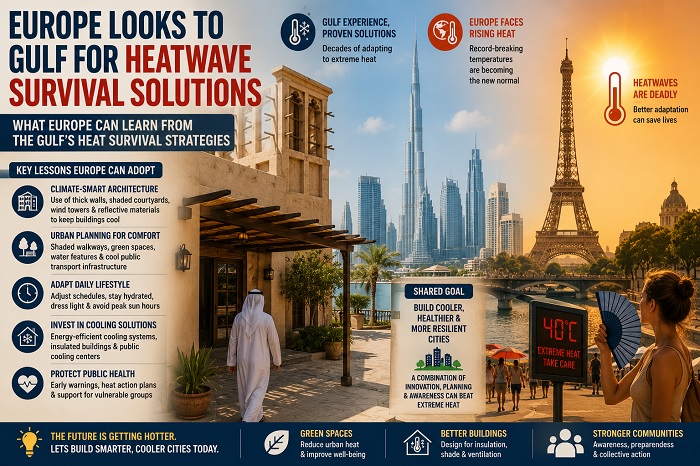
Dubai: As Europe experiences increasingly intense and prolonged heatwaves driven by climate change, experts say the continent can learn valuable lessons from Gulf countries that have spent decades adapting to extreme temperatures through architecture, urban planning, and lifestyle practices.
Nations across the Gulf region, where summer temperatures frequently exceed 45°C, have developed infrastructure and daily routines designed to reduce heat exposure and improve public comfort. Urban planners and climate experts believe many of these strategies could help European cities become more resilient as record-breaking temperatures become more common.
One of the key lessons lies in architecture. Traditional Gulf buildings feature thick insulated walls, shaded courtyards, narrow streets, wind towers, and reflective construction materials that naturally reduce indoor temperatures while limiting direct sunlight. Modern developments continue to incorporate energy-efficient cooling technologies and climate-responsive designs.
Experts also point to city planning as a crucial factor. Gulf cities increasingly invest in shaded walkways, covered public transport stations, green spaces, water features, and extensive air-conditioned public facilities. These measures help residents move around more safely during periods of extreme heat while reducing heat stress.
Lifestyle adjustments are another important aspect of heat adaptation. In many Gulf countries, outdoor activities are scheduled during the early morning or evening hours, while work schedules are often modified during the hottest part of the day. Hydration, lightweight clothing, and avoiding prolonged sun exposure have become integral parts of daily life.
Climate specialists argue that Europe has historically been designed for colder weather, leaving many homes, public buildings, and transportation systems ill-equipped to cope with prolonged heat. As temperatures continue to rise, cities may need to rethink building regulations, increase urban greenery, expand cooling centers, and strengthen heat action plans.
Public health experts warn that extreme heat has become one of the deadliest climate-related hazards, particularly for older adults, children, outdoor workers, and individuals with chronic medical conditions. Improving urban resilience and public awareness will therefore be essential to reducing heat-related illnesses and fatalities.
Governments across Europe have already begun implementing emergency response measures during heatwaves, including public cooling shelters, weather alerts, and restrictions on outdoor work. However, experts believe long-term adaptation through climate-conscious infrastructure and behavioral changes will be equally important.
As global temperatures continue to rise, the experience of Gulf nations demonstrates that living with extreme heat requires a combination of innovative architecture, sustainable urban planning, and lifestyle adaptation. These approaches may offer a practical roadmap for Europe as it confronts a warmer future.
About the Author