
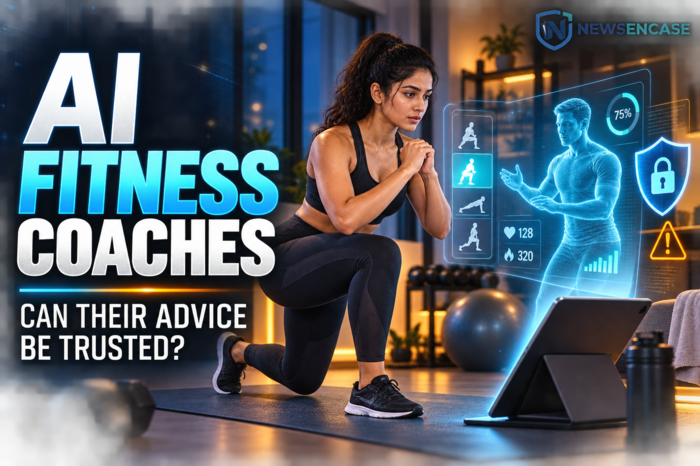
AI fitness coaches can organise workouts and track progress, but users must consider injury risk, data privacy and the limits of automated advice.
Artificial-intelligence fitness tools can now build workout plans, analyse wearable data and adjust sessions within seconds. Their convenience is making them one of 2026’s most visible wellness trends.
Used carefully, an AI coach can help organise exercises, record progress and offer substitutions when equipment is unavailable. The danger comes when polished recommendations are mistaken for professional assessment.
Where AI Can Be Useful
A user can ask for a simple routine based on available time and equipment, then use the tool as a training log. Reminders and gradual progressions may help people stay consistent.
However, the output depends on the information provided. An app cannot reliably account for an undisclosed injury, inaccurate medical history or pain it cannot examine. It may also recommend too much volume, unsuitable intensity or an exercise whose technique the user does not understand.
Generated calorie-burn estimates and wearable measurements should be treated as approximations. Using them to justify restrictive eating or excessive exercise can be harmful.
Protect Health Data and Know the Limits
Fitness apps may collect sensitive information including weight, sleep, menstrual-cycle data, location and heart rate. Users should review privacy settings, permissions and data-deletion options before connecting multiple services.
AI should never diagnose chest pain, fainting, severe shortness of breath or a significant injury. Those symptoms need appropriate medical evaluation. People in rehabilitation or living with complex health conditions require individual professional guidance.
A sensible workflow is to use AI for organisation while keeping human judgement in control. Start conservatively, check technique with a qualified coach when possible and change the programme when recovery or pain signals demand it.
The technology can lower barriers to planning, but it cannot feel a joint, observe every movement or accept clinical responsibility. The safest AI fitness coach is an assistant—not an unquestioned authority.
About the Author