
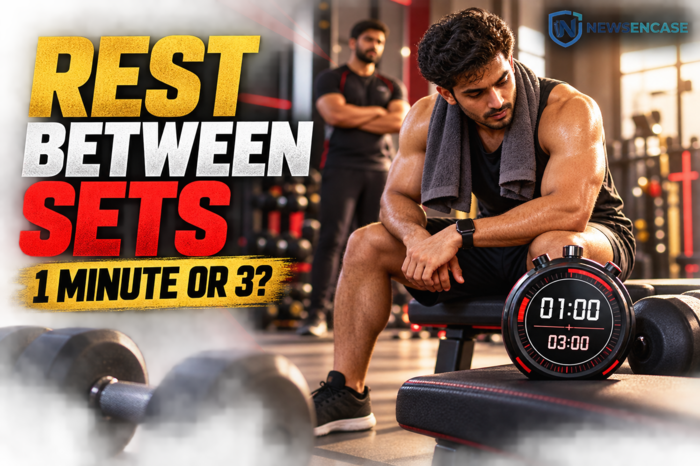
Rest between sets affects strength, repetitions and workout quality. Heavy exercises usually require more recovery than lighter accessory movements.
Rest intervals are easy to overlook, yet they influence how much weight a person can lift, how many repetitions they complete and how long a workout lasts.
There is no universally perfect rest period. The right choice depends on the exercise, load, training goal, experience and time available.
Longer Rest Supports Heavy Work
Heavy compound exercises such as squats, deadlifts, presses and rows create substantial muscular and systemic fatigue. Resting for two to five minutes can help restore performance before the next demanding set.
People training mainly for maximum strength generally need longer recovery because maintaining load and technique is important. Rushing the next set may reduce repetitions or encourage poor form.
For moderate-load muscle-building work, roughly one to three minutes is common. Smaller isolation exercises—such as curls, lateral raises or calf raises—may require less rest than heavy full-body movements.
Short rests can make a session feel more intense, but breathlessness is not the same as muscular overload. If cardiovascular fatigue prevents the target muscles from working effectively, extending the interval may improve the set.
Use Performance as the Guide
A timer creates consistency, but it should not override judgement. The lifter should feel physically and mentally ready to perform the next set with control.
Rest may need to be longer in heat, after poor sleep or during unfamiliar exercises. Supersets can save time by alternating movements that train different muscle groups, although they may still increase overall fatigue.
People managing blood pressure should avoid breath-holding and should not rush from one hard set to another. Dizziness, chest discomfort or unusual shortness of breath requires stopping.
The simplest rule is to rest long enough to preserve the purpose of the exercise. Strength work deserves generous recovery; lighter accessory work can often move faster. Consistent progression matters more than copying an influencer’s stopwatch.
About the Author